


How to Style a Minimal Modest Outfit That Looks Premium
Minimal and modest fashion combines simplicity with elegance, offering a refined wardrobe that reflects personal values while maintaining a polished appearance. The key lies in intentional choices: high-quality fabrics, neutral tones, and smart layering techniques. Here's how you can achieve a premium look with minimal effort:
- Fabrics Matter: Opt for materials like crepe, nidha, silk blends, wool, and linen. These drape beautifully, resist wrinkles, and elevate even simple outfits.
- Neutral Colours: Build your wardrobe around shades like beige, navy, camel, and charcoal. These tones are timeless and versatile. This approach is essential when you build a modest capsule wardrobe focused on longevity.
- Layering Techniques: Use lightweight base layers, flowing middle pieces, and structured outerwear to create depth without bulk.
- Accessories: Stick to a few high-quality items like a leather handbag, silk scarf, or understated jewellery for a polished finish.
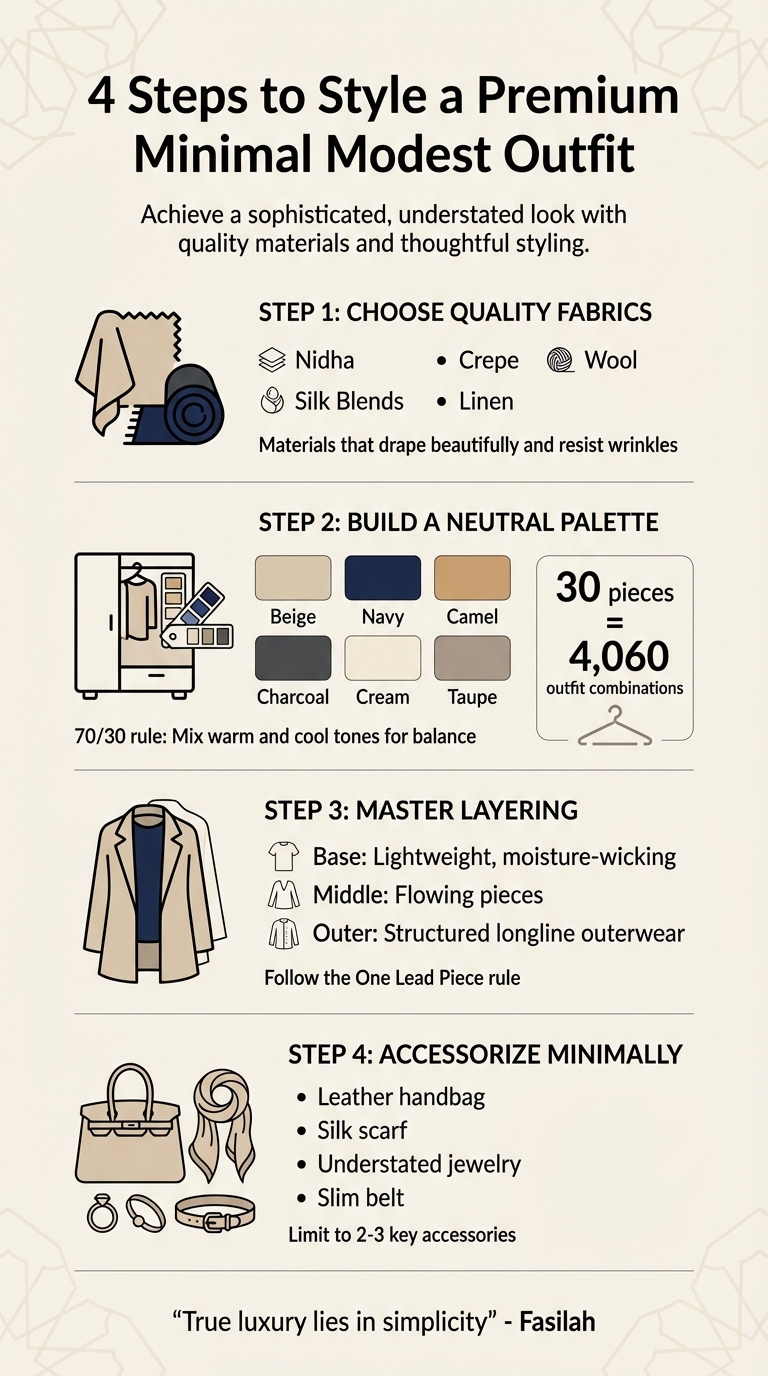
4-Step Guide to Styling Premium Minimal Modest Outfits
Choosing Quality Fabrics for a Polished Look
The secret to premium outfits lies in the fabric. High-quality materials form the backbone of a refined, modest wardrobe, aligning seamlessly with principles of minimalism and Islamic modest fashion. The difference is noticeable - these fabrics drape elegantly, move fluidly, and maintain their shape, creating a polished silhouette even with the simplest modest pieces.
"Luxury fabrics are high-quality textiles that are carefully crafted using the finest fibers... characterized by their durability, texture, and sophisticated appearance." - Suited & Booted
Understanding Fabric Types
When it comes to modest fashion, understanding fabric choices for your abaya can make all the difference.
-
Nidha: A favourite for abayas and jilbabs, this 100% polyester fabric is soft, lightweight, and moisture-friendly.
"The look and feel of nidha fabrics brings a high-end finish to any piece which will be equally at home on a girl's day out as it will be at a formal family banquet." - AbayaButh
- Crepe: Known for its textured surface and natural drape, crepe is a versatile option. It resists wrinkles, making it perfect for layered modest styles. Its subtle texture adds depth without compromising elegance.
- Wool: Ideal for structured outerwear like coats and jackets, wool offers durability and breathability. Heavier wools are perfect for winter, while lighter variations transition well between seasons.
- Silk blends: These fabrics bring a soft sheen, making them great for special occasions. They drape beautifully and reflect light subtly, adding an understated elegance.
- Linen: Perfect for warmer months, linen combines breathability with a sophisticated aesthetic. Its natural fibres ensure comfort without sacrificing style.
When choosing fabrics, think about the garment's purpose. Structured pieces like A-line skirts or tailored trousers benefit from heavier materials like wool or taffeta. For flowing styles like maxi dresses or wraps, opt for fluid fabrics such as crepe or viscose.
However, selecting the right fabric is just the beginning. Proper care is essential to maintain their premium appearance.
Care and Maintenance of Quality Fabrics
To keep high-quality fabrics looking their best, proper care is non-negotiable. Always check labels before washing - materials like wool, silk, and cashmere often require dry cleaning to preserve their texture and drape.
Before washing, test a small, hidden area to ensure the fabric reacts well to water and detergent. This step is especially crucial for multi-toned outfits, as it prevents shrinkage or colour bleeding.
"Fabric that maintains consistent drape and color quality after repeated washing significantly increases customer satisfaction and brand loyalty." - Afreen Hafsa, Fashion Designer
Ironing? Use the right temperature for each fabric to avoid damage. For storage, hang structured garments properly and fold knits to keep their shape intact.
Delicate materials like chiffon and satin need extra care - separate them from rougher fabrics, and consider using garment bags. These steps prevent snags and ensure your pieces retain their shape, colour, and drape over time. This longevity is what makes investing in quality fabrics worthwhile.
sbb-itb-81d10cb
Selecting Neutral and Elegant Colour Palettes
Neutral tones are the backbone of a refined wardrobe. Think black, white, grey, navy, beige, camel, cream, brown, and taupe - these shades create a timeless base, making essential modest pieces simpler.
"Neutrals are the backbone of your wardrobe. They offer versatility, flexibility and allow you to create a wide variety of outfits with ease." – Judi Prue, Personal Stylist
Research published in the Journal of Fashion Marketing and Management revealed that neutral business attire boosts perceived credibility by 23% compared to brighter or trendier colours. This underscores why neutrals are ideal for modest fashion, where elegance and quality take priority.
Colour temperature is another key consideration. Warm neutrals, like cream, camel, tan, and brown, contrast with cool neutrals such as pure white, grey, navy, and charcoal. To create a polished look, stick to one undertone family. If mixing warm and cool tones, use the 70/30 rule - 70% of one temperature with 30% of the other - to maintain a balanced aesthetic.
Tonal dressing, where you layer pieces in varying shades of the same colour family, is an effortless way to achieve a sophisticated look. For instance, an all-beige or all-grey outfit elongates the silhouette and exudes quiet luxury. To keep tonal outfits visually interesting, mix at least three textures - like silk, wool, and leather. A neutral capsule wardrobe of just 30 pieces can theoretically produce 4,060 unique three-piece combinations, proving that simplicity doesn’t limit creativity.
The Power of Neutral Tones
Neutral tones are the foundation of understated luxury. They embody an aesthetic that favours premium materials and subtle elegance over flashy branding. Black, white, and grey bring timeless sophistication, while warmer shades like beige, camel, and cream add a welcoming softness.
"Warm neutrals create a feeling of understated elegance and bring an air of effortless sophistication to any wardrobe." – Style Editor, Timeless London
Seasonal shifts also influence neutral choices. Spring and summer favour lighter tones - cream, stone, beige, and dove grey - paired with breathable fabrics like linen and cotton. In colder months, deeper shades like chocolate, forest green, navy, and charcoal pair beautifully with wool, cashmere, and velvet. Surprisingly, stark black and white suit only about 25% of people, as their high contrast can be unflattering on many skin tones. If black feels too harsh, try alternatives like marine navy, charcoal, or dark chocolate for a more complementary effect.
Adding Subtle Pops of Colour
Once you’ve mastered a neutral foundation, adding a single accent colour can elevate your look. A well-placed pop of colour can add personality without disrupting a minimalist aesthetic. For example, soft pastels like lilac, powder blue, dusty rose, or sage lend a gentle, feminine touch, while jewel tones such as emerald, sapphire, burgundy, or deep plum are perfect for evening events or special occasions.
The "Neutral + One Accent" formula is a simple way to incorporate colour. Start with a fully neutral base, then add a bold accent through a structured handbag, scarf, or standout shoes. Another option is layering a coloured piece under a neutral coat for a modern, balanced look.
Muted tones like olive, burgundy, rust, or charcoal can also function as extended neutrals. These hues provide variety while maintaining a sophisticated aesthetic. They also serve as "bridge colours", smoothly transitioning between warm and cool tones. For example, taupe and olive work seamlessly with both temperature families, making them invaluable for a cohesive wardrobe.
Mastering Modest Layering Techniques
Modest layering is all about creating depth and dimension without adding unnecessary bulk. Start with thin, moisture-wicking base layers made from materials like merino wool, silk, or synthetic blends. These fabrics provide warmth and comfort while maintaining a sleek, lightweight appearance.
"Layering is an art that, when done correctly, can transform a simple outfit into a chic and sophisticated ensemble without compromising personal style." – Islamic Fashion
A key tip is to follow the "One Lead Piece" rule. This means letting one standout garment - such as a statement abaya, a tailored blazer, or a longline cardigan - be the focal point of your outfit. Keep other layers simple and complementary. Stick to a single colour palette for both base and outer layers to achieve a cohesive, polished look.
This method pairs beautifully with premium fabrics and neutral tones, creating a sophisticated foundation. From here, incorporating longline outerwear can further enhance your silhouette.
Layering with Longline Outerwear
Once your base layers are in place, longline outerwear becomes the star of your outfit. Open abayas, trench coats, tailored blazers, and longline dusters are ideal for creating a clean, vertical line that elongates your frame without adding unnecessary volume. For spring, opt for lightweight fabrics like cotton or linen paired with silk or viscose scarves for a breathable yet elegant look. In winter, go for chunky knit cardigans, tailored wool coats, or heavier weaves to stay warm while maintaining structure.
"The long outer layer... creates a clean vertical line. Whether it's an open robe, a longline coat, a kimono-style layer, or an abaya, the effect is similar: it frames the outfit underneath and instantly makes the whole look feel intentional." – Lavish Concepts
Choose fabrics that drape naturally, such as crepe, satin crepe, or viscose, as they move gracefully with your body and avoid stiffness. For colder months, layer thermal leggings and thin thermal tops under abayas or dresses to stay warm without compromising the outer silhouette. In summer, sleeveless slip dresses under open abayas ensure airflow while maintaining full coverage.
Balancing Proportions
Achieving the right proportions is essential when layering. Pair flowing pieces like wide-leg trousers or maxi skirts with structured items, such as a tailored blazer, to create balance. When layering tunics, aim for lengths that hit mid-thigh to keep the overall look sharp and well-proportioned.
"The goal isn't to stack garments. The goal is to create depth and dimension - whilst still feeling light." – Lavish Concepts
Define your waist by adding a slim belt over long cardigans or open abayas. For added interest, mix textures - like matte trousers paired with a subtly sheened top - to create visual depth without adding weight. Start with fitted basics, such as high-quality turtlenecks or long-sleeve tops in neutral shades, as a base. This allows for more voluminous outer layers without overwhelming your silhouette.
Accessorising for a Polished Finish
Building on refined fabrics and sophisticated layering, the right accessories can complete your look with elegance and intention.
Accessories have the power to transform a simple outfit into something that feels premium. The key isn’t about adding more but about selecting fewer, high-quality pieces that enhance your ensemble. As Lena Layne aptly says:
"The goal is to complement and enhance - not overwhelm".
Think of accessories as the finishing touch. A silk scarf in soft ivory or blush, a structured leather handbag in neutral tones, or a slim belt to cinch your waist can elevate your entire look effortlessly. The principle is straightforward: less is more. A single, well-made accessory can make a stronger statement than several less refined ones.
Selecting Modest Accessories
Start with scarves crafted from luxurious materials like silk, chiffon, or cashmere in neutral shades. If your outfit feels a little plain, consider scarves with subtle patterns - delicate polka dots or soft floral designs add texture without overpowering a minimalist aesthetic.
Belts are another effective addition for defining your silhouette. A slim belt offers a subtle accent, while a wider belt can bring structure to flowing abayas or dresses. Both options align with a modest yet intentional style.
Structured handbags in classic colours like black, brown, or beige are versatile and polished. Be mindful of proportions: oversized bags pair well with flowing garments, while smaller, structured designs complement tailored outfits seamlessly.
Once your primary accessories are in place, understated jewellery can provide the finishing touch.
Jewellery and Embellishments
When it comes to jewellery, simplicity is key. Classic stud earrings, understated hoops, or minimalist drop earrings add just the right amount of sparkle without detracting from your overall look. For necklaces, layering delicate chains with small pendants can create interest, or you might choose a single statement piece, such as a pearl necklace or a sleek gold chain.
A timeless watch with a leather strap or a gold-tone finish adds a touch of sophistication. For bracelets, opt for sleek metallic designs in gold, silver, or rose gold. Whether you stack a few thin bangles or wear a single bold cuff, the idea is to subtly highlight your wrist. To tie everything together, coordinate the metal tones of your jewellery with the hardware on your handbags, belts, and shoes.
"Jewellery that feels like punctuation, not a headline." – Lavish Concepts
To avoid visual clutter, limit yourself to two or three key accessories. If your outfit already features embroidery or beading, keep jewellery minimal. On the other hand, a simple outfit can be elevated with one thoughtfully chosen statement piece.
Conclusion
Every detail - from fabric choices to layering techniques and accessories - comes together to craft a polished, modest aesthetic.
Creating a refined modest outfit starts with thoughtful decisions. Opt for high-quality fabrics that offer both elegance and durability. Build your wardrobe around neutral shades like cream, camel, navy, and charcoal, which effortlessly complement one another and exude understated sophistication.
Embrace the three-layer approach: a base layer, a middle piece, and a structured outer layer. This adds depth and dimension while maintaining coverage. Striking a balance is key - combine flowing garments with tailored pieces to keep your outfit well-proportioned and elegant.
Complete your ensemble with one carefully chosen accessory, such as a structured handbag or subtle jewellery. As Fasilah aptly puts it, "True luxury lies in simplicity, sustainability, and self-expression".
Incorporate varied textures for visual interest, use a slim belt to define your waist when necessary, and focus on versatile essentials that can be styled in multiple ways. Start with foundational pieces in neutral tones and expand your collection thoughtfully. Let your wardrobe reflect your values and individuality.
FAQs
How can I tell if a fabric looks premium in person?
To spot a high-quality fabric, start by feeling it - premium materials often have a smooth, substantial texture and a dense weave that signals durability. Hold the fabric up to the light; top-tier fabrics are usually opaque unless intentionally made to be sheer. Tightly woven fabrics often exude a sense of luxury and longevity. They should also feel soft yet weighty, lending an elegant and polished appearance.
Which neutral colours suit my skin tone best?
Neutral colours can elevate your wardrobe, but the key is selecting shades that complement your skin's undertone. Here's how it works:
- Warm undertones: Shades like beige, camel, tan, and brown will enhance your natural glow. These earthy tones create a cohesive and balanced appearance.
- Cool undertones: Opt for colours like grey, charcoal, navy, and crisp white. These hues bring out the cool tones in your skin, adding a refined touch.
Not sure about your undertone? A quick trick is to check the colour of your veins. If they appear greenish, you likely have warm undertones. If they look blue, cool undertones are your match. Picking the right neutrals for your undertone ensures a polished and harmonious look, perfect for premium modest styling.
How do I layer modestly without looking bulky?
To dress modestly without creating a bulky appearance, begin with a snug base layer, such as a fitted long-sleeve top or a turtleneck made from breathable fabric. Layer with longer items like a lightweight cardigan or tunic to add dimension while keeping things sleek. Steer clear of thick, heavy fabrics and instead go for thinner, more structured materials. When it comes to outerwear, choose slim-fit coats or jackets, and keep accessories understated to maintain a clean, refined look.