


Modest Fashion Essentials Every Man Should Own
When it comes to dressing modestly, men often focus on clothing that reflects their values while offering practicality and comfort. Modest fashion prioritises loose-fitting, non-transparent garments that align with Islamic principles, such as covering the awrah (from navel to knee). From thobes to kufi caps, these wardrobe staples cater to daily prayers, professional settings, and special occasions without compromising on functionality or style. Here's a quick rundown of must-have pieces:
- Thobes: A timeless garment with regional variations, now designed for UK weather with warmer fabrics and ribbed cuffs.
- Jubbas: A straight, ankle-length outfit perfect for prayers, formal events, or daily wear, made with breathable yet durable materials.
- Djellaba Sets: Hooded robes offering comfort and elegance, especially suitable for colder months or religious gatherings.
- Mukhawaras: Emirati garments with simple embroidery, ideal for both casual and festive occasions.
- Shalwar Kameez: A versatile two-piece outfit, blending South Asian heritage with practicality for UK climates.
- Kufi Caps: A meaningful accessory that combines spiritual significance with everyday wear.
- Casual Longline Shirts: Modern yet modest, suitable for casual or professional settings.
Each item serves a purpose, balancing modesty with practicality across seasons and occasions. Whether you're preparing for daily prayers, formal gatherings, or simply enhancing your wardrobe, these pieces provide a functional and stylish foundation.
1. Tailored Thobe
Cultural Significance
The thobe holds deep meaning in Islamic culture, symbolising modesty, piety, and gratitude. Its roots lie in Qur'anic teachings, where clothing is described as a "divine gift" meant to conceal and adorn (Al-A'rāf 7:26). The garment reflects key values of the faith, while regional variations showcase local traditions. For instance, the Saudi thobe is known for its crisp white fabric and structured collar, while the Emirati kandura features a collarless design and a decorative tassel. As My Hijab London puts it:
"The thobe is more than just a garment rather, it's a symbol of heritage, modesty, and timeless style".
Practicality for UK Weather
Traditional thobes, designed for the warm climates of the Gulf, often fall short when it comes to handling the damp and chilly UK weather. Features like open ankle slits and loose cuffs let in the cold. However, modern UK-specific designs now address these challenges with sealed rounded bottoms and ribbed cuffs to keep out the wind. Winter versions take it further with technical upgrades, such as 330GSM bonded double-layer fabrics and faux suede linings, offering much-needed warmth and protection against the elements. Darker shades like black, green, and grey are becoming increasingly popular, blending with local preferences while maintaining a polished look.
Fabric Quality and Comfort
Thobes from brands like Al-Badr Clothing (priced between £19.99 and £32.99) are crafted using high-quality materials like premium Korean fabric and Japanese cotton, ensuring durability and comfort. Cotton-rich blends provide breathability suitable for year-round wear, while polyester-viscose options offer wrinkle resistance, making them ideal for daily use. These fabrics also allow for natural movement during salah, and practical design features - such as loose sleeves or ribbed cuffs - make adjustments for wudu quick and easy. Such thoughtful details enhance the thobe’s versatility, making it easier to pick the perfect thobe for any event.
Suitability for Different Occasions
Tailored thobes with structured collars and buttoned cuffs are perfect for formal settings. For everyday wear, the minimalist Emirati kandura offers comfort and ease. Meanwhile, the Omani dishdasha, with its intricate embroidery, is well-suited for weddings, Eid celebrations, and other religious events. Modern hybrid designs, incorporating elements like Mandarin collars or hooded details, merge traditional modesty with contemporary streetwear, making the thobe a versatile choice for prayer, work, or casual outings. As a wardrobe essential, the tailored thobe seamlessly bridges traditional and modern styles.
sbb-itb-81d10cb
2. Jubba
The Jubba is more than just a garment; it's a blend of cultural tradition and modern-day practicality, making it an essential piece in many wardrobes.
Cultural Significance
The Jubba holds deep meaning, symbolising a unified Muslim identity while promoting modesty. Its design aligns with the Qur'anic teaching: "O children of Adam, We have bestowed upon you clothing to cover your nakedness and as an adornment; but the clothing of taqwā (God-consciousness) is best" (7:26). With its straight, ankle-length silhouette, the Jubba not only conceals the body's shape and covers the 'awrah but also acts as a subtle reminder of spiritual discipline. Regional variations in style reflect the rich diversity of Muslim traditions, while the garment itself serves as a quiet statement against vanity in daily life.
Practicality for UK Weather
Originally designed for warmer climates, the Jubba has evolved to suit the UK's unpredictable weather. Modern fabric technology has made it possible to adapt this traditional attire for year-round comfort. Cotton-rich blends with added structure work well across seasons, while suiting fabrics are particularly popular for their balance - neither too heavy nor too light. For winter, wool-blend Jubbas offer warmth without causing discomfort indoors, while summer calls for lightweight linen or polyester-cotton blends that manage moisture effectively and resist wrinkles. These fabric choices ensure the Jubba remains functional and stylish, no matter the season.
Fabric Quality and Comfort
The choice of fabric plays a crucial role in the Jubba's comfort and durability. Polyester-cotton blends provide breathability, durability, and wrinkle resistance, making them ideal for busy lifestyles. Suiting fabrics, on the other hand, maintain their shape throughout the day, ensuring a polished look. Brands like Al-Badr Clothing use premium materials such as Korean fabric and Japanese cotton to create Jubbas that are both comfortable and long-lasting. When selecting a Jubba, it's recommended to choose a length that just grazes the anklebone, staying true to the Sunnah and avoiding garments that drag on the ground. This attention to material and fit ensures the Jubba is ready for any occasion.
Suitability for Different Occasions
The Jubba's versatility makes it suitable for a wide range of settings. For formal events like Eid or weddings, modern Jubbas often feature tailored cuts and embroidery, while a classic white Jubba remains a timeless option. Adding a sleeveless waistcoat can elevate the look further. For everyday wear or Friday prayers, practical polyester-cotton blends with functional details like pockets and comfortable sleeves strike the perfect balance between style and utility. Even in professional environments, pairing a navy Jubba with leather loafers creates a smart, business-appropriate outfit that respects Islamic values while meeting contemporary workplace standards. Whether for prayer, work, or celebrations, the Jubba adapts seamlessly to any occasion.
3. Djellaba Set
The Djellaba, a traditional Moroccan garment, has transcended its origins to become a fashion staple, as highlighted by New Arabia. This full-length, hooded robe combines a rich heritage with practical design, making it a must-have for those seeking modest yet stylish attire.
Cultural Significance
In Morocco, the Djellaba is more than just clothing - it's a representation of cultural pride and refined elegance. It aligns with Islamic modesty by covering the 'awrah while maintaining a graceful appearance. The garment’s embroidery often reflects regional origins, and its colours carry symbolic meanings. For example, white Djellabas are associated with purity and are commonly worn for Friday prayers or religious gatherings, while earthy tones are preferred for casual, everyday use. The pointed hood, known as the "qob", not only adds a unique aesthetic but also historically served as protection against harsh desert winds and chilly mountain air. This blend of cultural depth and functionality makes the Djellaba timeless.
Practicality for UK Weather
The Djellaba’s design is surprisingly well-suited for the UK's famously unpredictable weather. Originally crafted to endure Morocco's temperature extremes - hot days and cold nights - it transitions effortlessly to Britain's climate. Wool and cotton versions are ideal for late February, when Ramadan 2026 begins, offering warmth during winter prayers and evening iftars. The loose-fitting design allows for layering, ensuring comfort without sacrificing style. For summer, lightweight cotton or linen options provide breathability, while the hood offers year-round protection from wind and rain. This adaptability makes the Djellaba a versatile choice for any season.
Fabric Quality and Comfort
The fabric of a Djellaba plays a key role in its comfort and durability. For colder months, wool or lined materials offer excellent insulation, particularly for outdoor prayers during February and March. In contrast, summer calls for breathable fabrics like light cotton or linen. Traditional craftsmanship, such as hand-stitching and detailed embroidery, often distinguishes high-quality Djellabas. When choosing one, ensure it fits well at the shoulders and reaches the ankles for a polished look. Al-Badr Clothing offers Djellaba sets for £49.99, complete with intricate embroidery and a belt, balancing tradition with modern needs.
Suitability for Different Occasions
The Djellaba’s versatility makes it a go-to garment for various settings. Neutral-toned cotton versions are perfect for daily activities, Friday prayers, or relaxing at home. For events like weddings or Eid, opt for silk or fine cotton Djellabas adorned with gold or silver embroidery. Recently, the Djellaba has gained popularity among younger generations in cities like East London, Birmingham, and Manchester, where traditional designs are paired with modern footwear like loafers or trainers for a fresh look. Whether for religious ceremonies, cultural celebrations, or everyday wear, the Djellaba continues to embody modesty with style.
4. Mukhawara
The Mukhawara, a traditional Emirati garment once worn in majlis, embodies both understated elegance and a rich connection to heritage. As Mukhawar London puts it:
"The mukhawar is more than traditional clothing. It is a quiet symbol of Emirati heritage, a garment once worn in gatherings where oud lingered in the air".
This deep-rooted association with storytelling and communal celebrations imbues the Mukhawara with a sense of cultural depth that goes beyond its fabric.
Cultural Significance
Every thread in the Mukhawara tells a story. Its intricate embroidery - crafted in gold, silver, or vivid hues - reflects pride in Emirati traditions. Though it shares some similarities with the jalabiya, the Mukhawara maintains its distinct identity within Gulf Arab culture. It holds great significance for men attending Friday prayers, religious gatherings, or community events, where tradition and elegance blend seamlessly. This heritage is now reflected in modern fabric choices, designed to ensure comfort while preserving the garment's timeless appeal.
Fabric Quality and Comfort
The Mukhawara is designed with desert life in mind, relying on breathable materials to balance resilience and comfort. According to Mukhawar London:
"Stitched from breathable fabrics like cotton and linen, the mukhawar was designed for life in the desert - resilient yet soft, modest yet full of life".
Linen, in particular, stands out for its strength - being two to three times thicker than cotton - while offering excellent moisture-wicking capabilities. For daily wear, cotton provides a lightweight, breathable option, though it tends to crease more easily. For more formal occasions, Boski, a luxurious silk-cotton blend, offers a glossy finish and year-round versatility. Al-Badr Clothing offers Mukhawaras starting at £19.99, featuring delicate floral embroidery and relaxed fits that merge traditional craftsmanship with modern comfort.
Suitability for Different Occasions
For everyday use, opt for cotton or linen Mukhawaras with simple embroidery. During special celebrations like Eid or weddings, versions adorned with intricate gold or silver threadwork shine. Thanks to its loose fit, the Mukhawara ensures both modesty and ease of movement, making it a versatile choice for religious ceremonies, cultural gatherings, or even leisurely weekends at home.
5. Shalwar Kameez
The Shalwar Kameez is a two-piece outfit that combines South Asian heritage with everyday practicality. As Pakistan's national dress and a common choice across South Asia, it has become a wardrobe essential for many in the British Muslim community. Its loose-fitting design not only adheres to Islamic principles of modesty for men but also serves as a cultural emblem, often worn during Friday prayers (Jumu'ah) and Eid celebrations.
Cultural Significance
This outfit aligns with the Sunnah (practices of Prophet Muhammad PBUH), placing emphasis on modesty, simplicity, and avoiding unnecessary extravagance. Its relaxed fit allows for ease of movement, making it ideal for performing salah (daily prayers). In the UK, the Shalwar Kameez acts as a bridge between cultural heritage and modern British life. Whether it's for mosque visits, family events, or festivals, this outfit remains a versatile choice that respects tradition while catering to contemporary needs. The thoughtful selection of fabrics ensures it is well-suited to the UK's variable climate, adding a layer of practicality to its cultural importance.
Practicality for UK Weather
The UK's ever-changing weather - marked by cold winters and mild summers - demands fabrics that balance warmth with breathability. For winter, wool blends are a great choice, offering warmth without excessive bulk and resisting odours. For year-round versatility, mid-weight crepe provides a structured look, good drape, and layers well. During warmer months, cotton or linen blends are preferable over pure cotton, as they crease less and maintain a polished appearance even in damp conditions. The Shalwar Kameez, with its adaptability and breathable fabrics, handles the UK's mix of indoor heating and outdoor chill with ease, making it a practical yet stylish option.
Fabric Quality and Comfort
The choice of fabric is crucial for ensuring comfort and durability, especially in a UK setting. "Wash & wear" materials like polyester–cotton blends are excellent for busy lifestyles, offering wrinkle resistance and durability. Fabrics with a higher GSM are better for winter wear, providing thickness and warmth, while lower GSM fabrics are lighter and ideal for summer. For added comfort in colder months, viscose linings can help manage moisture while retaining warmth. Wool-based garments, a popular choice for winter, should be air-dried flat to maintain their shape, as tumble drying in damp conditions can damage the fabric.
Suitability for Different Occasions
For everyday wear and Friday prayers, cotton-rich blends with a structured finish provide both comfort and insulation. For formal occasions like Eid or weddings, linen blends with light embroidery strike a balance between elegance and practicality. Velvet is a luxurious option for winter events, offering both warmth and a rich texture, while raw silk provides lightweight warmth, perfect for evening gatherings. Whether for casual mosque visits, festive celebrations, or family gatherings, the Shalwar Kameez adapts effortlessly to a variety of settings and occasions.
6. Kufi Cap
The Kufi Cap is more than just an accessory; it’s a meaningful addition to a modest wardrobe that honours tradition while suiting everyday life in the UK. This timeless piece carries deep historical and spiritual significance. Named after the city of Kufa in modern-day Iraq, it was worn by the Prophet Muhammad and his companions. For many Muslim men in the UK, the Kufi is a visible expression of faith and a way to follow the Sunnah, serving as a daily reminder of humility and devotion during Salah.
Cultural Significance
The Kufi’s history is rooted in Islamic principles of modesty and simplicity. As Al Nasr puts it:
"The Kufi cap's simple yet elegant design embodies the principles of modesty and simplicity that are central to Islamic teachings".
Beyond its religious importance, the Kufi also gained prominence as a symbol of resistance during the civil rights movement in the United States, famously worn by figures like Malcolm X. Today, it seamlessly connects tradition with modern life, making its way into both mosque settings and the daily wardrobes of British Muslims.
Practicality for UK Weather
The unpredictable UK weather makes the Kufi a practical choice. Its snug fit provides warmth in colder months and sun protection in summer. Wool felt or velvet Kufis are perfect for winter, offering extra insulation and structure, ideal for outdoor prayers or commutes. For summer, lightweight cotton stretch-knit Kufis are designed to be breathable and easy to pack, thanks to their double-layered sides and loose-knit tops. If caught in a drizzle, simply blot the Kufi with a towel and let it dry naturally to maintain its shape. These weather-friendly features highlight the importance of choosing high-quality materials.
Fabric Quality and Comfort
The fabric of a Kufi plays a key role in comfort and durability. Wool felt offers a polished, structured look for colder days, while cotton stretch-knit Kufis provide softness and breathability for everyday wear. To ensure a proper fit, measure just above the ears so the Kufi sits comfortably without leaving marks. For maintenance, dust wool felt Kufis with a soft-bristled brush, and hand-wash cotton ones before air-drying. As Gamble & Gunn note:
"A well-made hat is meant to be worn, lived in and looked after. With the right care, it will not only last, but improve with time".
Suitability for Different Occasions
The versatility of the Kufi makes it suitable for a range of occasions. For mosque visits or Friday prayers, solid-coloured cotton Kufis in shades like black, navy, or brown pair well with both casual and traditional outfits. For formal events such as Eid or weddings, wool felt or velvet Kufis in darker tones add a refined touch to tailored suits. Ghanaian Kufis, made from vibrant fabrics with intricate patterns, celebrate heritage while adding a splash of colour. Whether it’s for Jumu'ah, family gatherings, or everyday errands, the Kufi remains a meaningful and practical addition to any modest wardrobe.
7. Casual Longline Shirt
The Casual Longline Shirt blends modest wear with a contemporary twist, offering an extended length and relaxed fit that ensures both coverage and style. For Muslim men in the UK, this versatile piece has gained traction as a go-to option for everyday wear, effortlessly balancing tradition with modern streetwear aesthetics. Its adaptability makes it a practical choice for a variety of occasions.
Practicality for UK Weather
Given the UK's unpredictable weather, the fabric of a longline shirt plays a huge role in its practicality. During the summer, materials like linen or lightweight cotton blends are ideal for keeping cool and comfortable. As the seasons shift to autumn and winter, heavier jersey fabrics not only provide warmth but also add extra coverage thanks to the shirt's extended length. With prices ranging from £8.00 to £45.00, there are options to suit a range of budgets, making this wardrobe staple accessible without compromising on style or comfort.
Fabric Quality and Comfort
The right fabric can make all the difference when it comes to comfort and durability. For a polished, office-ready look, shirts made from 100% cotton or linen are excellent choices, offering a crisp finish while maintaining modesty. On the other hand, jersey fabrics are perfect for more casual settings, providing a softer, laid-back feel. To avoid an overly loose silhouette, some designs feature cinched waists, or you can pair the shirt with slim-fit trousers for a balanced look. Opt for styles with longer sleeves and higher necklines to ensure ample coverage while keeping the overall appearance sharp and versatile.
Suitability for Different Occasions
Thanks to its adaptable design, the longline shirt transitions effortlessly between casual and formal settings. For everyday wear, pair it with jeans or chinos - the extended hem ensures coverage even when you're on the move. In professional settings, a crisp cotton or linen longline shirt works well layered under a blazer and paired with tailored trousers for a refined look. Neutral, monochromatic tones like black, white, or beige create a streamlined outfit suitable for most occasions. For evening gatherings or formal events, elevate the look with premium fabrics like sateen and add a structured jacket to maintain modesty while exuding sophistication.
Feature Comparison
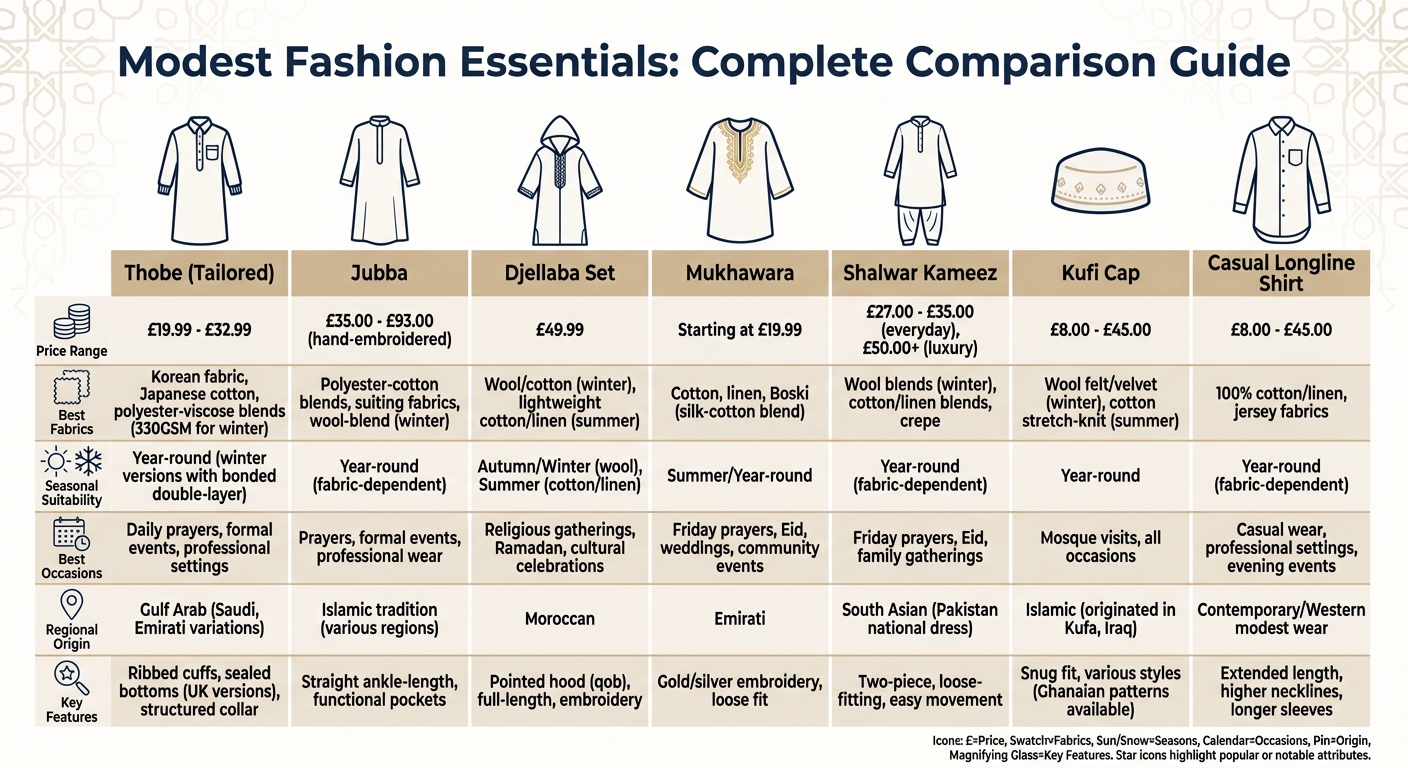
Modest Fashion Essentials for Men: Complete Garment Comparison Guide
Creating a well-rounded modest wardrobe means understanding the practical and stylistic details of each garment. Comparing these features helps you make informed choices. For instance, fabric plays a key role in comfort across seasons. Lightweight cotton and linen are ideal for British summers, while wool and cashmere provide the warmth needed during colder months. If you’re after something easy to care for, poly-cotton blends are a great option.
Price points vary based on fabric quality and design. Everyday thobes typically range from £27.00 to £35.00, while more luxurious pieces with intricate embroidery start at £50.00. Hand-embroidered jubbas fall within a range of £35.00 to £93.00. Seasonal suitability is another important factor. Garments are often made with specific weather in mind - lightweight fabrics for summer and heavier weaves for winter. Emirati kanduras, with their breathable synthetic fabrics and collarless design, are perfect for hot weather. On the other hand, Moroccan djellabas, featuring pointed hoods and thicker materials, are better suited for cooler seasons like autumn and winter.
The occasion also matters when choosing your outfit. Saudi thobes, with their structured collars, are a great fit for formal events like weddings or business meetings. Meanwhile, the understated Emirati kandura is ideal for casual, everyday wear. Jubbas, often adorned with rich embellishments, are well-suited for religious ceremonies or family gatherings. The Shalwar Kameez is incredibly versatile - simple cotton versions are perfect for daily prayers or running errands, while heavily embroidered designs are a standout choice for Eid celebrations. For a traditional look, ensure the hem falls 1–2 inches above the ankle.
Conclusion
A modest wardrobe revolves around versatile, high-quality pieces that cater to various occasions. Essentials like thobes and kufi caps effortlessly combine tradition with modern fashion. For instance, a classic white thobe works perfectly for Friday prayers and everyday wear, while a black thobe adds sophistication for formal evening events.
Having well-tailored garments can simplify your daily decisions. As Antonio Centeno, Founder of Real Men Real Style, wisely says:
"The details make the man, and you've been around long enough to buy yourself some nice, personalised details".
From spiritual practices to formal gatherings, each item contributes to the enduring appeal of modest fashion.
Prioritise quality when building your wardrobe. Natural fabrics like cotton and wool not only last longer but also retain their shape and colour over time, outshining synthetic options. As Justin Baer aptly puts it:
"Fewer, but better, items create a more polished, sophisticated wardrobe that will remain relevant year after year".
Complete your look with a well-crafted kufi cap and smart footwear. These accessories provide a touch of personal style while staying true to modest principles.
Ultimately, your modest wardrobe is more than just clothing - it’s a reflection of your faith and personal identity. Begin with one or two foundational pieces, ensure they fit well, and gradually expand your collection to suit all occasions. Each thoughtfully selected item strengthens your connection to your values while enhancing your everyday style.
FAQs
How do I choose the right size and length for a thobe or jubba?
To choose the correct size and length for a thobe or jubba, start by measuring your chest for the width and your height for the length. The ideal length should allow the garment to fall just above the ankles, in line with modesty and prophetic teachings. Aim for a fit that's comfortable - not overly tight or baggy - while adhering to Islamic guidelines. A measuring tape is a handy tool to ensure precision, helping you achieve a balance of comfort and modesty.
Which fabrics are best for modest wear in the UK across seasons?
For the UK's warmer months, go for light and breathable fabrics like cotton, linen, and viscose. These materials help you stay comfortable and cool, with cotton being a favourite thanks to its ability to wick away moisture.
When it gets colder, opt for insulating fabrics such as wool, wool blends, or heavy Nidha. These choices not only keep you warm but also ensure modesty, making them ideal for handling the UK's famously unpredictable weather.
How can I dress modestly for work without looking underdressed?
To achieve a modest yet professional appearance for work, opt for tailored Thobes or Jubbas crafted from quality fabrics. Make sure they are well-fitted, tidy, and feature understated designs without overly elaborate details.
For an added touch of sophistication, incorporate subtle layers such as a tailored blazer or a modest shirt. The goal is to strike a balance between coverage, professionalism, and style, all while honouring cultural values.