


Why Fabric Weight Matters in Thobes and Abayas
Fabric weight, measured in GSM (grams per square metre), is a key factor in choosing thobes and abayas. It affects comfort, climate suitability, modesty, and durability. Lightweight fabrics (100–160 GSM) are breathable and ideal for summer, while heavier fabrics (180 GSM and above) provide warmth and structure for colder weather. Selecting the right weight ensures the garment feels comfortable, drapes well, and offers proper coverage without unnecessary layering.
Key points:
- Lightweight fabrics: Great for hot climates, breathable, but may require layers for modesty.
- Heavier fabrics: Suitable for cooler weather, offer better opacity and durability.
- Drape and opacity: Heavier fabrics hold shape and provide coverage; lighter ones flow more but can be sheer.
- Climate matters: Wrong fabric weight can lead to discomfort, overheating, or inadequate warmth.
Tip: Test fabric drape and opacity before buying. For UK weather, choose breathable fabrics for summer and mid-to-heavy options for cooler seasons. Al-Badr Clothing offers thobes and abayas tailored to these needs, with prices starting at £19.99.
The Problem: Wrong Fabric Weight Selection
Picking the wrong fabric weight can quickly turn a perfectly designed garment into something uncomfortable and impractical. A common issue is when the fabric doesn't align with the climate. Imagine wearing a heavy wool-blend thobe during summer - it traps heat, limits airflow, and leads to excessive sweating. On the flip side, a lightweight cotton voile abaya in winter offers little insulation, forcing you to layer up with bulky undergarments. These extra layers not only disrupt the garment's fit but also alter its intended silhouette and drape.
Modesty can also become a concern with ultra-light fabrics like chiffon or georgette. These materials, especially in white or pastel shades, can become semi-sheer under bright lights or strong sunlight. This often means adding slips or inner layers to maintain proper coverage, which can detract from the garment's flowing, elegant design.
Fabric weight also plays a big role in how a garment drapes and holds its shape. For example, a fabric that's too light for a structured thobe might cling awkwardly or billow unpredictably in the wind. On the other hand, a fabric that's too heavy for an abaya can look stiff and lose its graceful flow. Materials such as linen, while lightweight, are prone to creasing, which can take away from the polished, formal look many people aim for.
Practicality is another factor. Lightweight, delicate fabrics like silk or chiffon require extra care and maintenance. Meanwhile, heavier fabrics can feel restrictive in warmer weather (above 25°C), especially if you're moving around a lot.
"Wearing a fabric out of sync with your climate may cause discomfort or excessive layering." - Awrah Abayas
Choosing the wrong fabric weight doesn't just affect comfort - it can also impact how long a garment lasts and how much effort it takes to maintain. Recognising these challenges is essential for making better fabric choices, which we'll explore in the next section.
How Fabric Weight Affects Comfort and Climate Suitability
Fabric weight is a key factor in ensuring comfort across different climates, especially when it comes to thobes or abayas. The GSM (grams per square metre) of a fabric determines how well it suits specific weather conditions. Choosing the wrong weight can lead to discomfort, whether it’s overheating during summer or feeling the chill in winter. Let’s take a closer look at how fabric weights perform under varying climate conditions.
Lightweight Fabrics for Hot Weather
In warmer climates, lightweight fabrics are ideal for staying cool and comfortable. Materials with a GSM range of 100 to 160 are particularly effective. Cotton and linen are excellent choices for these conditions as they allow heat to escape and wick away moisture efficiently. Linen’s loose weave enhances air circulation, giving it a refreshing, crisp feel that’s perfect for hot days.
For thobes, TR fabric - a blend of polyester and viscose - is a popular option. It is often produced in weights as low as 125, 135, or 140 GSM, offering a practical mix of breathability and durability. When it comes to abayas, Nida fabric is a favourite. It provides a silk-like texture while remaining lightweight, typically falling between 100 and 150 GSM. These fabrics work well with the loose-fitting design of traditional garments, allowing for maximum ventilation and airflow.
Heavier Fabrics for Cooler Weather
When the temperature drops, heavier fabrics become essential for staying warm. Materials in the range of 180 GSM and above are better suited for cooler conditions. Wool and cashmere are excellent natural insulators, with their tight weaves effectively trapping body heat and shielding against cold winds. A good example is tropical-weight merino wool, which weighs around 220 GSM. Its tightly twisted yarns help retain warmth while remaining comfortable to wear.
For harsher winters, such as those in the UK, bonded double-layer fabrics offer superior protection. One standout example is a hooded thobe made from 330 GSM bonded double-layer fabric. It features a faux suede inner lining for added insulation, hidden stitch pockets, and a rounded bottom design to block cold air. Heavier fabrics also help maintain the modest silhouette of garments by preventing the "parachute effect", where lightweight materials cling to the body in windy conditions.
How Fabric Weight Affects Drape, Modesty, and Durability
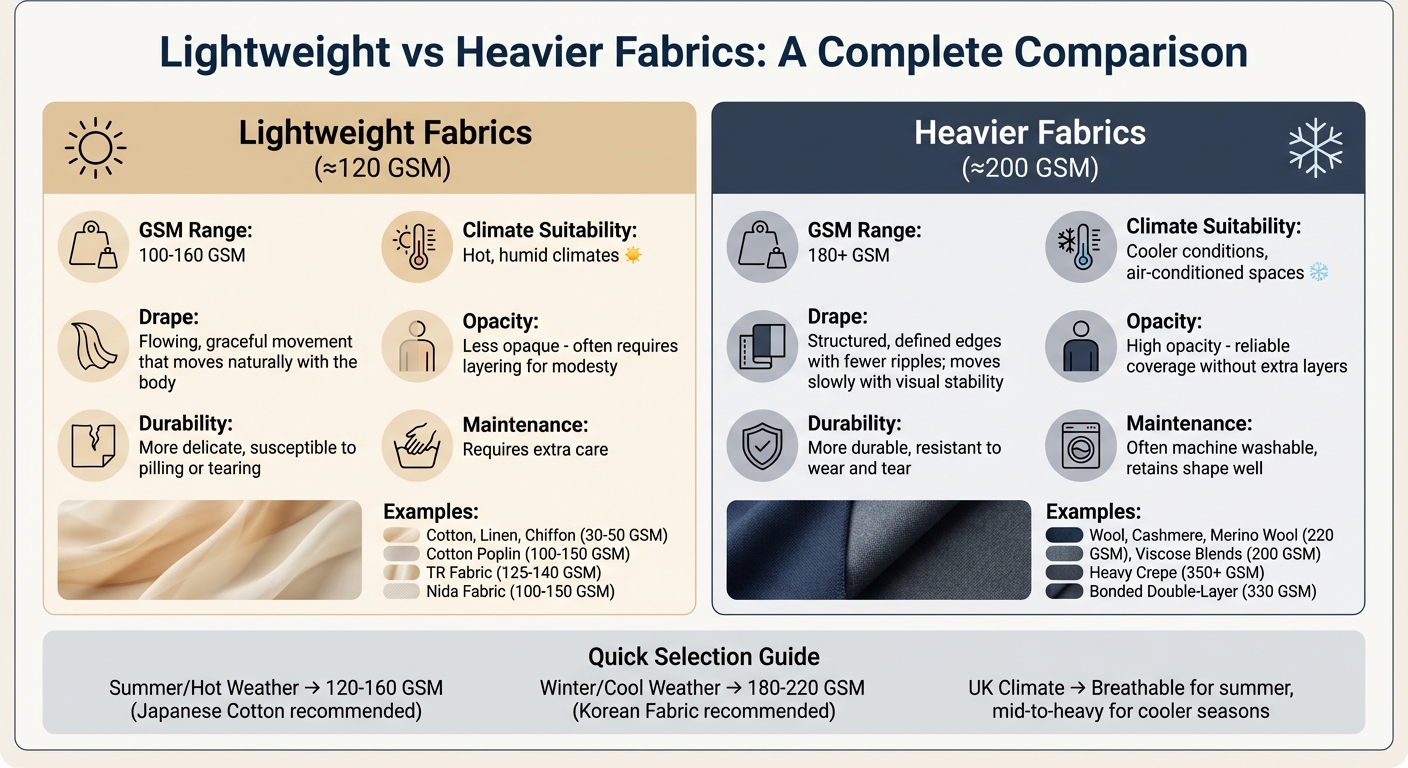
Lightweight vs Heavy Fabric Weight Comparison for Thobes and Abayas
Fabric weight plays a crucial role in shaping how a garment moves, covers, and withstands wear over time. While its importance in climate comfort is well-known, it also influences drape, opacity, and longevity. Understanding how GSM (grams per square metre) impacts these factors can help you make smarter choices that blend style with practicality.
Drape: The drape of a fabric determines how it flows and falls around the body. Lightweight materials create soft, fluid folds, while heavier fabrics tend to hang straighter, with more defined edges and fewer ripples. Fashion writer Lara Galan explains, "Heavier fabrics move more slowly, adding visual stability". While lighter fabrics respond dynamically to movement, heavier ones offer a more structured and controlled appearance, perfect for creating polished silhouettes.
Modesty and Opacity: The weight of a fabric directly affects its transparency. Lightweight options like chiffon (30–50 GSM) or cotton poplin (100–150 GSM) can be semi-sheer, often requiring linings for sufficient coverage. On the other hand, heavier fabrics such as viscose blends at 200 GSM or thick crepe naturally provide better opacity and shape retention, offering modesty without the need for additional layers. Garment specialist Nahyaan Poonawala emphasises, "Fabric weight is just as important as fibre content when determining how a garment performs in real wear".
Durability: Fabrics with higher GSM, such as velvet or heavy crepe (over 350 GSM), tend to be more durable. These denser materials are less prone to wear and tear, making them a practical choice for garments that need to stand the test of time.
Lightweight vs Heavier Fabrics: A Comparison
When deciding between lightweight and heavier fabrics, consider how they perform across several practical aspects:
-
Lightweight Fabrics (≈120 GSM):
- Perfect for hot, humid climates due to their breathability.
- Deliver a flowing, graceful drape that moves naturally with the body.
- Tend to be less opaque, often requiring layering for modesty.
- More delicate and susceptible to pilling or tearing.
-
Heavier Fabrics (≈200 GSM):
- More suited to cooler conditions or air-conditioned spaces, offering insulation and structure.
- Provide high opacity, ensuring reliable coverage without extra layers.
- Retain their shape well and are often machine washable.
- Deliver a crisp, structured drape that resists wrinkling and maintains a clean silhouette.
Choosing the right fabric weight is about balancing aesthetics with practicality, ensuring the garment fits both your style and functional needs.
sbb-itb-81d10cb
Choosing the Right Fabric Weight at Al-Badr Clothing
Al-Badr Clothing understands how crucial fabric weight is to comfort and practicality, especially in the UK's ever-changing climate. To make the selection process straightforward, they provide clear recommendations tailored to different seasons and occasions, ensuring every garment is a perfect fit for the needs of UK wearers.
Fabric Recommendations for Thobes
For summer thobes, Al-Badr Clothing suggests fabrics in the 120–160 GSM range, crafted from Japanese cotton. This weight offers an excellent mix of breathability and structure, making it ideal for hot summer days or time spent in air-conditioned spaces. Japanese cotton is particularly prized for its soft texture and its ability to wick away moisture, keeping wearers cool and comfortable. These lightweight thobes also move gracefully with the body, ensuring ease of movement while maintaining modest coverage.
Fabric Recommendations for Abayas
When choosing the right abaya, a slightly heavier fabric is preferred to ensure proper coverage and warmth, given the UK's unpredictable weather. Al-Badr Clothing recommends 150–220 GSM Korean fabric, which provides excellent opacity without adding unnecessary bulk. This weight range is versatile, offering warmth during cooler weather while remaining comfortable in milder conditions. Korean fabric is also valued for its durability and ability to retain its shape, ensuring the abaya maintains its elegant drape even after multiple washes. Standard abayas typically require 2.5–3 metres of fabric, while butterfly or oversized designs may need 3.5–4 metres, which can influence the overall cost.
Pricing Overview
Al-Badr Clothing ensures modest wear remains accessible, with thobes priced between £19.99 and £32.99 and abayas ranging from £27.99 to £34.99. Price differences usually depend on design intricacy, embellishments, and fabric requirements rather than quality. Both thobes and abayas are crafted with care, offering excellent value for money. These versatile pieces are also easy to style for any occasion, making them a staple in any wardrobe. Plus, first-time customers can enjoy 10% off their purchase, along with free returns if the garments don’t meet expectations.
How to Assess Fabric Weight
Understanding how to evaluate fabric weight can help you make better decisions when choosing thobes or abayas, whether you're shopping in-store or online. While retailers often provide GSM (grams per square metre) figures, performing a few simple tests can give you a clearer picture of how those numbers translate into real-world use.
Testing Drape and Opacity
The drape test is a quick way to see how a fabric behaves. To try this, drape the fabric over the back of a chair or hold it by two corners and let it hang. Lightweight fabrics will fall softly with gentle curves, while heavier fabrics will form more defined folds and pleats. This gives you an idea of how the garment will move and feel when worn.
Another essential check is the light test, especially for modesty. Hold the fabric up to a light source, like a lamp or window, and see how much light passes through. If you can clearly see your hand behind the fabric, it's likely under 150 GSM and may need a lining for proper coverage. Fabrics that block light completely are denser and offer better opacity, making them ideal for modest wear without the need for extra layers. This is particularly helpful when you're looking at lightweight options for summer.
These simple tests can give you a good sense of the fabric's practicality, but understanding the fibres themselves is equally important.
Choosing Natural Fibres
Natural fibres such as cotton, linen, and wool are often more breathable and durable than synthetic materials. To assess fabric quality, feel the material. Natural fibres tend to have a softer, more pleasant texture that improves with washing. For thobes, fabrics with minimal stretch, like long-staple cotton, are a great choice. They maintain a polished look, hold creases well, and offer a crisp, professional appearance compared to stretchy materials.
If you're shopping online, consider requesting fabric swatches before making a decision. Comparing swatches side-by-side lets you feel the thickness, flexibility, and texture against your skin, ensuring the fabric meets your expectations for comfort and modesty.
Conclusion
Fabric weight plays a crucial role in comfort, modesty, and the longevity of garments. Lightweight fabrics are ideal for summer, offering breathability, while heavier fabrics provide the insulation and structure needed for cooler, damp conditions - perfect for adapting to the UK's unpredictable seasons.
The weight of a fabric also affects how it drapes and its opacity. Heavier materials tend to hang smoothly, ensuring a modest silhouette and reducing the risk of sheerness. They're also more hard-wearing, thanks to tighter weaves that resist pilling and stretching. This combination of structure and fluidity is essential for creating a wardrobe that transitions seamlessly through the seasons. For formal occasions, the clean lines and polished appearance of well-weighted fabrics add a touch of sophistication.
When choosing fabrics, think seasonally. In summer, breathable, medium-weight natural fibres work best, while winter calls for mid-to-heavy options like wool blends or heavy crepe. Simple tests, such as checking the drape and opacity, can help you make informed decisions when shopping, whether in-store or online.
For those in the UK, Al-Badr Clothing offers a thoughtfully curated collection designed to meet local weather needs. Each garment balances comfort, durability, and style while maintaining the modesty you value. Explore their range to find pieces that work effortlessly for every season.
FAQs
What GSM should I choose for UK seasons?
For the UK seasons, a GSM (grams per square metre) of around 330 is ideal for winter. It provides a good balance of warmth and durability to handle the colder months. During summer or warmer periods, it's better to go for fabrics with a lower GSM, as these are lighter and more breathable, keeping you comfortable in the heat.
How can I check if a fabric will be see-through?
To figure out if a fabric is see-through, pay attention to its weight, weave, and texture. Fabrics that are lightweight or sheer tend to be more transparent, but a tight weave can make even lighter materials less see-through. A simple way to test is by holding the fabric up to the light or placing it over a contrasting surface. This will give you a clear idea of how much light passes through and whether the fabric works for your intended purpose.
Which fabric weights work best for travel and daily wear?
For travel and everyday wear, lightweight and medium-weight fabrics are excellent choices. Lightweight fabrics are easy to pack, breathable, and comfortable, making them perfect for trips. On the other hand, medium-weight fabrics provide added durability and a bit more coverage, ideal for daily use. Both types ensure comfort, ease of movement, and versatility across different environments.