


How to Maintain Shape and Fit in Thobes Over Time
Want your thobes to look flawless for years? Here's the key: Proper care tailored to the fabric type and occasion. From washing to storage, every step matters. Follow these basics:
- Wash with care: Use cold water (30°C max) and mild detergent. Avoid high temps to prevent shrinkage and fading.
- Dry gently: Air drying is safer than tumble drying. Use padded or wooden hangers to avoid shoulder bumps.
- Iron smartly: Iron while damp, using the right heat setting for the fabric. Protect embroidery by ironing inside out.
- Store wisely: Keep thobes in breathable garment bags, away from sunlight and humidity. Use wide hangers for structure.
For tougher stains or delicate designs, professional cleaning is your best bet. By following these simple steps, you’ll keep your thobes in great condition for years to come.
Reading Fabric Care Labels
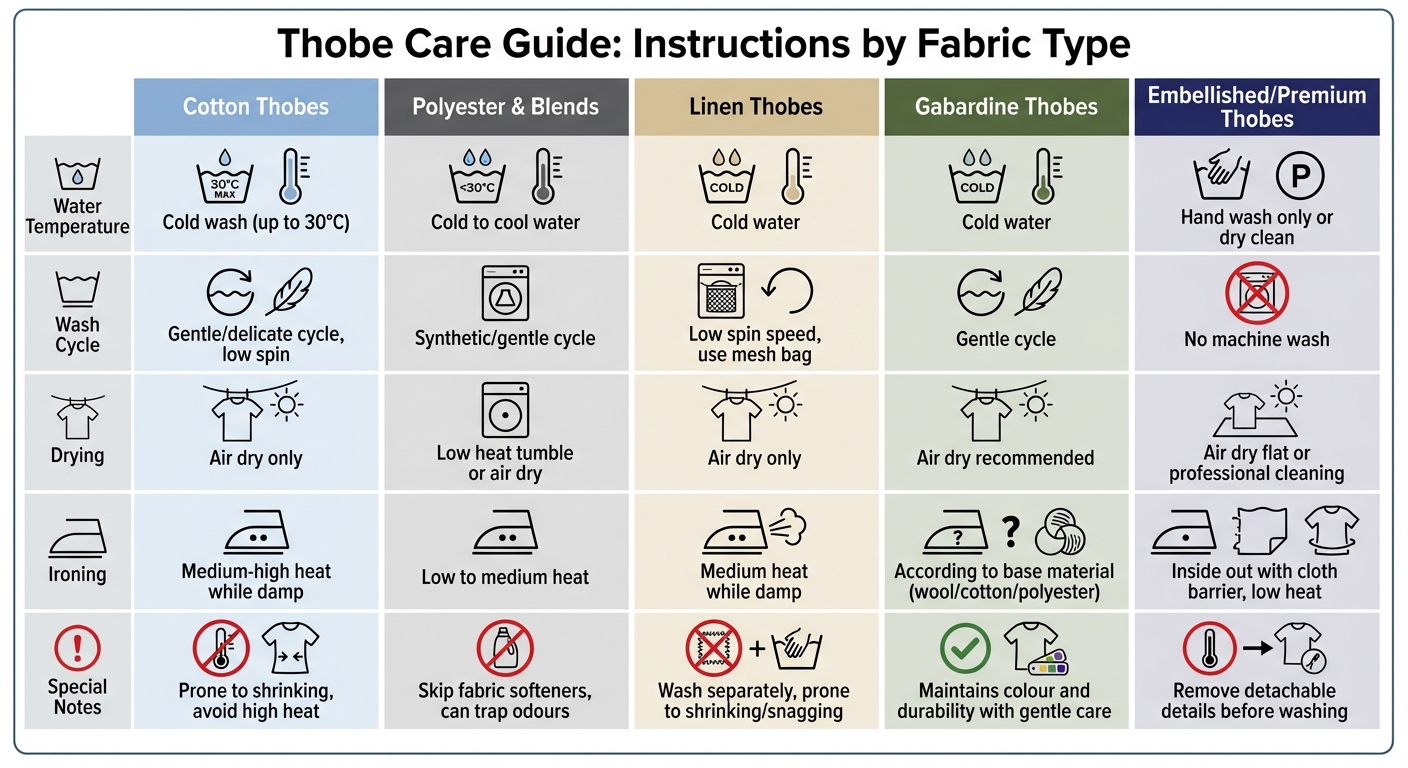
Thobe Fabric Care Guide by Material Type
Taking the time to read fabric care labels is essential for keeping your thobe in top condition. These labels provide crucial guidelines for washing, drying, ironing, and storage, helping to maintain the garment's shape, fit, and overall quality. Ignoring these instructions can lead to problems like shrinkage, fading, stretching, or even damage to delicate embroidery or embellishments. In fact, the Federal Trade Commission mandates that manufacturers include at least one safe care method on a permanent, legible label.
"This simple step [reading the label] will make your life a lot easier and prevent any mishaps." – New Arabia
Checking the care label when you pick the perfect thobe can also give you an idea of its maintenance requirements. For instance, a garment labelled "Dry Clean Only" will mean regular trips to a professional cleaner, which can add up over time. On the other hand, a label that says "Machine Wash Cold" allows for easier and more budget-friendly home care.
What Care Labels Tell You
Care labels often use universal symbols to convey important information – for example, a tub symbol indicates washing instructions, a triangle represents bleaching guidelines, and a square shows drying recommendations. These symbols are particularly helpful if the text is in a language you don’t understand.
The label also reveals the fibre composition, such as 100% cotton or a polyester blend. This information is key to understanding how the fabric reacts to heat, water, and cleaning agents. It specifies the safe washing method – whether the thobe needs dry cleaning, hand washing, or machine washing – and often includes a recommended water temperature, typically cold or lukewarm (up to 30°C).
Drying and ironing directions are equally important. The label will indicate if the garment can be tumble dried or if it should be air-dried, as well as the appropriate ironing temperature (like "Cool Iron" or "Medium Heat") to avoid heat damage. It may also warn against bleach or harsh detergents that could harm the fabric or embellishments. Following these instructions helps prevent common issues like shrinkage, colour fading, and damage to embroidery, ultimately extending the life of your thobe.
Next, consider the specific care instructions based on your thobe's material to ensure proper maintenance.
Care Instructions by Fabric Type
Different fabrics require tailored care, and the label provides details to address the unique needs of each material. Here’s how to care for some common thobe fabrics:
-
Cotton thobes
These need a gentle, cold wash (up to 30°C) and should be ironed on medium-high heat while still damp to reduce shrinking and wrinkling. -
Polyester and blended thobes
Polyester and blends are wrinkle-resistant but can hold onto odours. Skip fabric softeners and use low to medium heat for ironing to avoid shine or fibre damage. -
Linen thobes
Linen requires cold water, low spin speeds, and should be washed separately or in a mesh laundry bag to prevent shrinking or snagging. -
Gabardine thobes
Whether made of wool, cotton, or polyester, gabardine thobes should be washed on a gentle cycle with cold water to maintain their colour and durability. -
Embellished or premium thobes
Thobes with intricate embroidery, metallic accents, or crystals often need "Dry Clean Only" or "Hand Wash Only" care. Remove detachable details like tassels or buttons before washing to avoid damage or loss.
"Knowing the material of a fabric enables proper washing care, allowing the article to maintain its structure and out-of-the-box look for a considerable length of time." – Dutch Label Shop
sbb-itb-81d10cb
How to Wash Thobes Correctly
Taking care of your thobe during washing is key to keeping its shape and fit intact. The right techniques can help preserve its appearance and extend its lifespan. Avoid exposing it to excessive heat or friction, as both can cause damage. High temperatures can shrink cotton and linen fabrics permanently, while harsh spin cycles may distort the garment's structure.
Before machine washing, turn your thobe inside out to protect any delicate details. Remove buttons, collar stays, or tassels - especially common in Emirati or Omani styles - to prevent damage. Place the thobe in a mesh laundry bag if it has embroidery or is made from linen, as this reduces friction and minimises the risk of snagging. Use a mild, non-biological detergent and avoid chlorine bleach, which can weaken fibres and turn white thobes yellow. Also, limit soaking time to 15–30 minutes to prevent fibre damage and colour fading.
Washing Cotton Thobes
Cotton thobes are sensitive to heat and prone to shrinking. Wash them in cold or lukewarm water (up to 30°C) on a "delicate" or "gentle" cycle with a low spin speed to minimise stress on the seams. After washing, avoid wringing or twisting the garment, as this can stretch and distort the fabric. Instead, press out excess water by placing the thobe between two clean towels. Then, gently reshape the collar, shoulders, and placket before air-drying it on a wide, padded hanger in a shaded area.
"Heat shrinks and damages fabric. Air-dry naturally for the best results." – Al-Aniq
Washing Polyester and Blended Thobes
Polyester and blended fabrics are more durable and less prone to wrinkling than cotton but can trap odours. Wash them in cold or cool water using a synthetic or gentle cycle. Avoid fabric softeners, as they can coat fibres and lock in smells. Instead, add a splash of white vinegar to neutralise odours without harming the fabric. If there are stubborn underarm odours, apply white vinegar to the area and let it sit for 10–15 minutes before rinsing.
Once your thobe is clean, it’s important to tackle any stains promptly to maintain its pristine condition.
Treating and Removing Stains
Dealing with stains immediately is crucial to prevent them from setting. For liquid spills, blot gently with a soft cloth instead of rubbing, which can harm delicate fibres. For sweat and collar stains, make a paste with baking soda and water, applying it to the affected area before washing. For oil or grease stains, blot up excess oil, sprinkle talcum powder or cornflour to absorb residue, and then treat the spot with a small amount of mild dish soap. Food and drink stains can be addressed by blotting the liquid, rinsing with cold water, and gently working in a bit of liquid detergent with your fingers or a soft-bristle brush. For ink stains, dab carefully with rubbing alcohol - avoid scrubbing, as it may spread the ink. After treating any stain, soak the garment for 10 to 30 minutes (or overnight for tougher marks) to break down the substance before washing. Remember to steer clear of chlorine bleach, as previously mentioned.
Drying and Ironing Methods
Taking care of drying and pressing is key to keeping your thobe in great condition. The right techniques help maintain its shape, fit, and overall style. Air drying is often the go-to method, as it avoids the risks of shrinkage and damage that come with the high heat of tumble dryers. Materials like cotton and linen are particularly sensitive to heat, which can cause permanent shrinkage, while delicate embroidery may suffer damage or lead to excessive creasing.
When preparing your thobe for drying, avoid wringing or twisting it. Instead, gently press it between clean towels to remove excess moisture without stressing the fabric. While it's still damp, take a moment to reshape the collar, shoulder line, and placket. Then, hang it on a broad, padded, or wide wooden hanger in a shaded area. Direct sunlight should be avoided, as it can fade colours and weaken fibres over time.
Air Drying vs Tumble Drying
Once the thobe is washed, how you dry it makes all the difference. Air drying may take longer, but it’s a gentler method that helps preserve the fabric and reduce shrinkage. It’s also more energy-efficient. On the other hand, tumble drying - even on a low heat setting - can cause wear, set in wrinkles, and potentially damage the fabric. If you must use a tumble dryer, choose the lowest heat setting and remove the thobe while it’s still slightly damp to minimise harm. For delicate materials, air drying is always the safer option.
How to Iron and Steam Thobes
After drying, proper ironing or steaming is the finishing touch to keep your thobe looking polished. For best results, iron the garment while it’s still slightly damp. Always turn it inside out if it has embroidery or other heat-sensitive details. To protect the fabric, place a thin white cotton cloth between the iron and the garment, which also prevents a shiny finish on synthetic materials. Start with the collar and use the appropriate heat setting - medium-high for cotton and low-medium for synthetics.
For quick touch-ups between wears, a handheld steamer is a handy tool. Simply hang the thobe and steam it from top to bottom, letting gravity help release any creases. This method is particularly convenient for maintaining a crisp look without the need for ironing.
How to Store Thobes Properly
Once you've washed and ironed your thobe, storing it the right way is key to keeping it in great shape. How you store your thobe between wears can affect its structure and fit. Poor storage habits – like stuffing it into an overcrowded wardrobe or using flimsy hangers – can lead to creases, stretched shoulders, and even fabric damage. Proper storage helps your thobe stay sharp and well-maintained.
Selecting the Right Hangers
Choosing the right hanger makes a world of difference. Wide wooden or padded hangers are ideal because they distribute the weight of the fabric evenly, preventing those annoying hanger bumps. As Nasir Islam explains, "Use padded or wide wooden hangers to help maintain the shape of your thobe. Avoid thin wire hangers, as they can cause the fabric to stretch or leave unwanted creases". Thin wire hangers focus the weight on a small area, which can distort the shoulders. Always fasten the top button or zip before hanging to help the thobe keep its natural shape.
Best Storage Conditions
The environment where you store your thobe matters just as much as how you hang it. A cool, dry, and dark space is ideal. Direct sunlight can fade the fabric and weaken the fibres, while damp conditions can lead to mildew. Avoid cramming too many clothes into your wardrobe; leaving some space between garments allows them to breathe and prevents unnecessary friction that could harm delicate details.
Instead of plastic garment covers, opt for breathable fabric bags. Plastic traps moisture, which can lead to discolouration or damage over time. To keep your thobes smelling fresh and to ward off moths, you can place cedar blocks or lavender sachets in your wardrobe. If you have several thobes, it’s a good idea to rotate their use and air them out occasionally to minimise wear and tear from prolonged storage.
Regular Maintenance Tips
Keeping your thobe in excellent condition between washes doesn't have to be complicated. Simple habits like routine airing and gentle spot cleaning can go a long way in preserving the fabric and extending its lifespan. Small efforts can make a big difference in maintaining its look and feel.
Airing and Spot Cleaning
Airing your thobe regularly is an easy way to keep it fresh without resorting to frequent washing. Hang it in a well-ventilated space, away from direct sunlight, to avoid colour fading and weakening of the fibres. According to Nasir Islam from Jubbah.uk, "If your thobe isn't dirty but needs freshening up, use a fabric refresher spray or hang it in a steamy bathroom to release wrinkles and odours." The steam not only helps eliminate odours but also relaxes the fabric, smoothing out minor wrinkles without the need for ironing.
For small stains or marks, blot the area gently with a clean cloth - rubbing can spread the stain or damage the fabric. If dealing with oil or food stains, spot clean carefully and rinse thoroughly with clean water to avoid detergent residue, which can lead to discolouration. Never iron over a stain, as the heat can set it permanently into the fabric. For more detailed guidance on tackling stubborn stains, refer to the "Treating and Removing Stains" section.
If spot cleaning doesn’t do the trick, it might be time to consider professional cleaning services.
When to Use Professional Cleaning
Some situations demand expert care. If your thobe includes delicate embroidery, beadwork, or metallic accents, hand washing or professional dry cleaning is the safest option to prevent damage. As Nasir Islam points out, "Hand washing or professional dry cleaning is recommended to avoid damaging these delicate details."
Stubborn oil-based stains that resist home remedies may also require professional attention. Mohamed Sheikh from LuxeThobes advises, "For stubborn stains, professional cleaning might be necessary." Additionally, polyester blends, which are more prone to trapping odours than natural fibres, can benefit from a professional refresh.
Always check the care label - if it says "Dry Clean Only" or if you're unsure about the fabric type, leave it to the experts. Professional cleaners use the right solvents, water temperatures, and pressing techniques to protect the structure of your thobe and prevent issues like shrinkage or distortion.
Conclusion
Caring for your thobe doesn’t have to be complicated. Stick to a few simple steps to keep it looking sharp and lasting longer. Wash it in cool water (30°C or below), air dry it using sturdy hangers, and iron it while it’s still slightly damp, using the right heat setting for the fabric.
Storage matters too. Use breathable garment bags to protect your thobes from dust and sunlight, and rotate between garments to avoid overusing a single piece. Handle stains as soon as they happen, air out your thobe between wears, and check for any loose threads or minor wear regularly.
Al-Badr Clothing’s thobes, made with high-quality fabrics like Japanese cotton and Korean materials, are designed to stand the test of time. Whether you prefer the classic white cotton thobe or a modern polyester blend, following these care tips will help maintain its elegance and ensure it stays in excellent condition for years to come.
FAQs
How can I stop my thobe shrinking after washing?
To keep your thobe from shrinking, stick to washing it in cold water, as hot water can harm the fabric. Always check the care label for specific instructions since some materials require extra attention. Steer clear of harsh chemicals or bleach, as these can weaken the fabric over time. Opt for gentle detergents and avoid using high heat when drying to help preserve the thobe's size and shape.
What’s the safest way to remove stains without damaging the fabric?
Removing stains from a thobe requires care to protect the fabric. Start by avoiding harsh chemicals like bleach, which can damage delicate materials, especially white thobes. Instead, opt for a mild detergent or a fabric-safe stain remover. Always test these on a hidden part of the garment first to ensure they don’t cause discolouration or damage.
When treating the stain, use a soft cloth or sponge to gently blot the area - don’t rub, as this can spread the stain or weaken the fabric. Wash the thobe in cold water to prevent setting the stain further, and steer clear of high heat during drying, as it can shrink or damage the material.
Should I hang or fold my thobe for long-term storage?
To keep your thobe in top condition for long-term storage, hanging it is usually the best option. This method helps maintain its shape, prevents wrinkles, and is especially useful for delicate or structured fabrics. Hanging ensures the thobe stays in good form and looks impeccable.
However, if you're short on space or the fabric might stretch over time, folding can work as an alternative. Just make sure to fold it carefully to avoid creases and to protect the garment so it lasts longer.