


Why Fabric Choice Matters in Thobes and Abayas
Choosing the right fabric for thobes and abayas is about more than just style - it directly impacts comfort, durability, and suitability for different weather conditions. For those living in the UK, where the weather can shift unpredictably, selecting the right material ensures practicality while maintaining modesty. Here's what you need to know:
- Comfort and Breathability: Cotton and linen are ideal for summer, offering airflow and moisture-wicking properties. For colder months, wool and cashmere provide insulation.
- Modesty and Coverage: Dense fabrics like georgette and crepe offer better opacity and drape compared to lighter, sheer materials like chiffon.
- Durability and Maintenance: Linen is stronger than cotton, while polyester blends and crepe resist wrinkles and are easier to care for. Silk and satin, though elegant, require more careful handling.
- Seasonal Adaptation: Lightweight fabrics for summer and heavier options for winter ensure year-round practicality.
- Occasions: Everyday wear benefits from low-maintenance materials like polyester blends, while formal events call for luxurious fabrics like silk or satin.
How Fabric Choice Affects Comfort, Durability, and Modesty
The fabric you select plays a crucial role in determining your overall comfort, the garment’s durability, and its ability to provide the modest coverage you need. These aspects together influence whether a thobe or abaya becomes a reliable and cherished part of your wardrobe. Let’s explore how specific fabric qualities contribute to these essential factors.
Breathability and Temperature Control
When it comes to staying cool and comfortable, fabrics like cotton and linen are excellent choices. Their loose weaves allow heat to escape and air to circulate, making them ideal for warm weather. Linen, in particular, stands out for its ability to dissipate heat more effectively than cotton, making it a go-to option during summer months. Breathable fabrics also wick moisture, keeping you dry throughout the day.
For those in extremely hot climates, synthetic fabrics like Nida - a 100% polyester material - are engineered to be lightweight and breathable. Silk, on the other hand, offers natural temperature regulation, making it a versatile choice for all seasons.
But breathability is just one part of the equation. Ensuring opacity and a graceful drape is equally important for modest coverage.
Opacity and Drape for Modest Coverage
A modest garment must provide adequate coverage without revealing or hinting at the body underneath. This is where opacity and drape come into play. For instance, georgette is often favoured over chiffon because its denser weave offers better coverage while remaining lightweight.
"Nida fabric is known for its feather-like softness and silky smooth texture... It does not wrinkle or crease quickly, making it suitable for everyday use." – Modest Essential
Crepe is another excellent option, offering a structured and flattering drape that doesn’t cling to the body. In contrast, sheer fabrics like chiffon may require additional lining or layering to maintain modesty.
Durability and Care Requirements
The longevity of your garment largely depends on the fabric’s ability to withstand daily wear and washing. Linen, for example, is two to three times stronger than cotton, ensuring it holds its shape and form over time. Cotton and georgette are also durable options, capable of withstanding regular machine washing while maintaining their colour and structure.
Fabrics like crepe, georgette, Nida, and Kashibo are particularly low-maintenance, resisting wrinkles and shrinking while requiring minimal ironing. Polyester and poly-cotton blends are also practical choices for busy lifestyles, thanks to their quick-drying and robust properties.
To extend the lifespan of your garments, it’s best to use a delicate machine cycle or hand wash them with gentle detergents. Avoid harsh chemicals or bleach, and opt for air-drying - either by laying the garment flat or hanging it - to help preserve its shape.
sbb-itb-81d10cb
Common Fabrics Used in Thobes and Abayas
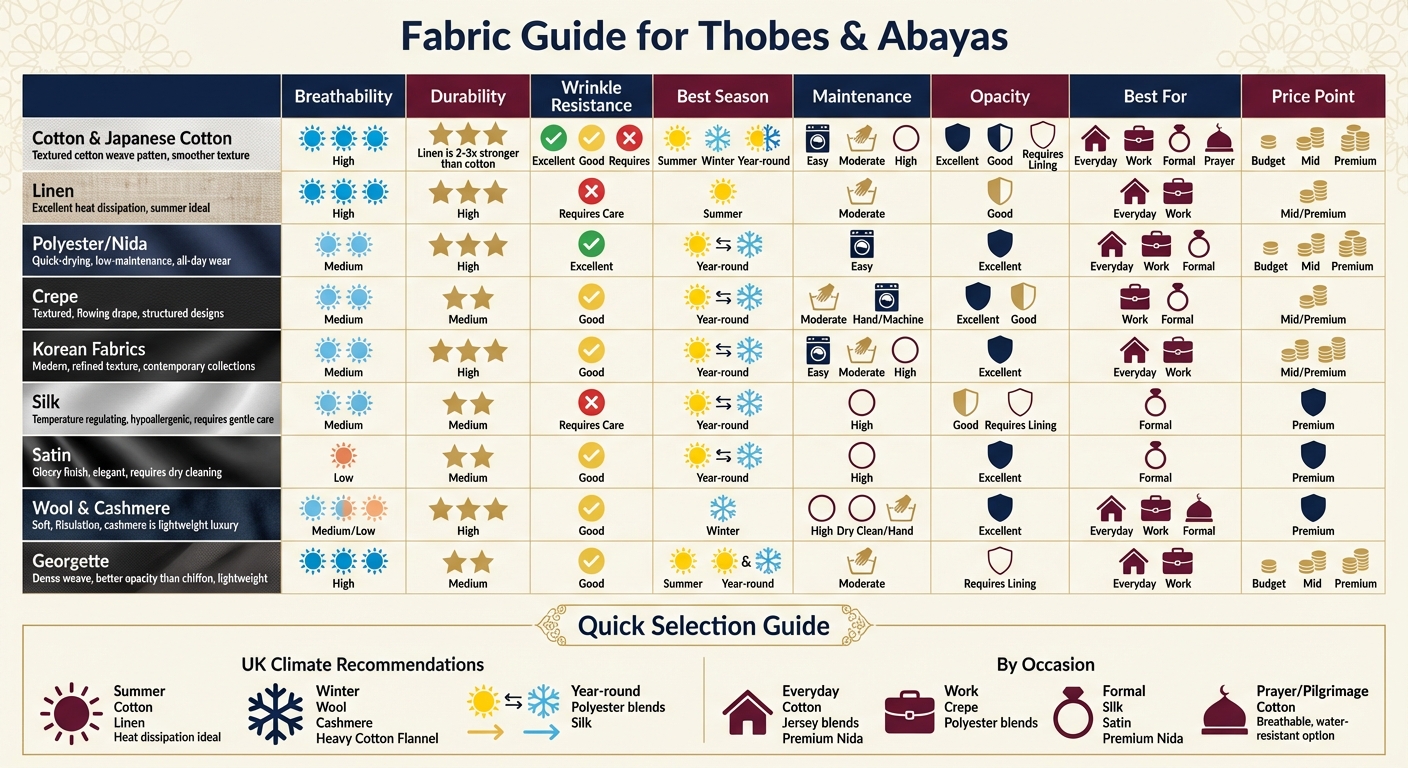
Fabric Comparison Guide for Thobes and Abayas: Properties and Best Uses
Understanding the unique qualities of various fabrics can help you choose the right thobes and abayas that suit the UK's unpredictable weather and diverse lifestyle needs. Each material offers distinct benefits, making it easier to find the right balance between comfort, style, and functionality.
Cotton and Japanese Cotton
Cotton remains a popular choice for everyday thobes and abayas in the UK. Its natural softness and breathability make it perfect for the country's changing seasons. Lightweight cotton works well for warmer months, while thicker blends provide a touch of warmth during cooler days. Plus, its durability ensures it holds up well even with frequent wear.
Japanese cotton takes these qualities up a notch with its finer weave and smoother texture, giving it a more luxurious feel. This premium fabric is often the top pick for high-quality thobes and abayas. Cotton is also a favourite for hijabs, thanks to its comfortable fit and insulating properties, making it ideal for year-round wear.
If you’re after something with a more modern twist or unique texture, there are other options worth exploring.
Polyester, Crepe, and Korean Fabrics
Polyester-based fabrics, including premium options like Nidha, are known for their wrinkle-resistant properties and polished appearance, making them a practical choice for all-day wear. Korean fabrics, often featured in contemporary collections, bring a refined texture and a modern edge to traditional designs.
Crepe, with its slightly textured surface created by a twisted weave, offers a flowing drape that resists creasing. Its weight and durability make it an excellent option for structured or tailored designs.
For the UK's unpredictable weather, polyester blends are a reliable choice. These fabrics dry quickly, hold their shape, and are easy to maintain - perfect for layering during sudden weather changes. Their low-maintenance nature is particularly appealing for those with busy schedules.
Satin and Silk Blends for Special Occasions
When it comes to formal events like weddings or evening gatherings, satin and silk blends bring a touch of elegance. Satin's glossy finish reflects light beautifully, creating a graceful and sophisticated look.
Silk, on the other hand, not only exudes luxury but also works as a natural temperature regulator. It keeps you cool during warm weather and cosy when it’s chilly - an excellent feature for the UK's varying climate. Additionally, silk is breathable, hypoallergenic, and gentle on sensitive skin, making it both practical and indulgent.
These luxurious fabrics do require extra care. Dry cleaning or gentle handwashing is recommended to maintain their finish, and they should be stored carefully to prevent snags. While they demand more attention than everyday fabrics like cotton or polyester, their elegance and sophistication make them worth the effort for special occasions.
Selecting Fabrics for UK Climates and Occasions
Seasonal Considerations
The UK's ever-changing weather means fabric choices need to be practical and adaptable throughout the year. For the milder summer months, linen and cotton are excellent picks. Linen has the ability to draw heat away from your body, making it a go-to choice for warm days. Cotton, on the other hand, is a versatile fabric that works well year-round. It provides breathability during hot spells and offers light insulation when the temperature dips slightly.
As winter sets in, heavier fabrics become essential. Wool and cashmere are standout options for keeping warm. Wool provides dependable insulation for everyday wear, while cashmere combines lightweight warmth with an irresistibly soft feel - ideal for luxurious winter thobes. For a practical alternative, heavy cotton flannel allows for easy layering, while polyester blends balance breathability with quick-drying abilities, making them well-suited for the UK's unpredictable conditions.
By tailoring your fabric choices to the seasons, you’ll be better prepared to tackle both the weather and your daily activities with ease.
Matching Fabric to Lifestyle and Events
Seasonal considerations aside, the right fabric can ensure your thobes and abayas remain practical, modest, and appropriate for various occasions. For everyday wear, jersey blends offer flexibility, making them ideal for active days. Meanwhile, premium Nidha provides soft, low-maintenance comfort that’s perfect for casual use. When it comes to workwear, crepe and polyester blends stand out for their wrinkle resistance and polished, professional appearance.
For formal occasions like Eid celebrations or weddings, fabrics such as silk, satin, or premium Nidha bring a touch of elegance with their smooth finish and graceful drape. However, for prayer or pilgrimages, cotton remains a top choice due to its breathability and the option for water-resistant treatments that add practicality to its comfort.
Practical Tips for Fabric Selection and Care
Building on the fabric properties mentioned earlier, these tips will help you choose fabrics wisely and keep your garments in great shape for everyday wear.
Checking Fabric Quality
A few quick tests can reveal a lot about fabric quality. Try the scrunch test: good-quality crepe or polyester should bounce back without leaving deep creases. Hold the fabric up to the light to check for opacity - this ensures proper coverage. High-quality materials also feel smooth and tightly woven. You can also examine the thread count and weave density to gauge how well the fabric will stand up to frequent use and washing.
Caring for Different Fabrics
Once you've chosen a durable fabric, proper care is key to keeping it looking its best. Different materials require different approaches:
- For delicate fabrics like silk or satin, hand washing in cold or lukewarm water with a mild pH-balanced detergent works best. If machine washing is necessary, use a mesh laundry bag and a gentle cycle.
- Always turn garments inside out before washing to protect their outer finish and embellishments.
- Air drying is ideal - lay items flat or use padded hangers in a shaded, well-ventilated area.
- When it comes to ironing, handheld steamers work wonders for silk and viscose. If using a traditional iron, stick to the lowest heat setting and place a thin cloth between the iron and the fabric.
- Cotton is more forgiving and can typically handle a machine wash on a gentle cycle, followed by tumble drying on low heat.
Creating a Wardrobe with Varied Fabrics
A well-rounded wardrobe combines fabrics suited to different seasons and occasions. Durable options like Japanese cotton are perfect for everyday wear, while Nida or Korean polyester blends offer easy maintenance and wrinkle resistance. For formal events, silk or satin garments bring a touch of sophistication.
To maintain your clothes' shape, store them on velvet or padded hangers - avoid wire hangers, as they can stretch and distort the shoulders. Keep your wardrobe in a cool, dry space away from direct sunlight to prevent fading and mildew. By balancing seasonal and formal needs, you’ll always have the right outfit ready for any occasion.
Conclusion
The fabric you choose can make all the difference when it comes to the comfort and style of your thobes and abayas. It’s not just about aesthetics – the material plays a key role in how well your garments handle Britain’s unpredictable weather, how long they last, and how versatile they are for everything from casual outings to formal events. The right fabric can turn an occasional piece into a dependable wardrobe favourite.
Knowing the properties of different fabrics can help you make better choices. For instance, when you choose the perfect thobe for every occasion, wrinkle-resistant crepe is perfect for a busy lifestyle, while silk adds a touch of sophistication for those special occasions. By understanding what each fabric brings to the table, you can feel more confident in your clothing choices.
Al-Badr Clothing offers a wide selection of fabrics to suit various preferences and occasions. Their range includes everything from everyday Essential Abayas to Winter Emirati Thobes designed for colder temperatures. With premium options like Japanese cotton and Korean fabrics, they combine durability with comfort to meet diverse needs.
Building a wardrobe with a mix of fabrics ensures you’re prepared for any situation. Investing in high-quality materials means your garments will not only look great but also stand the test of time. Whether you’re after low-maintenance polyester blends for daily wear or luxurious silk for formal gatherings, thoughtful fabric choices elevate both the practicality and beauty of your clothing. With proper care and attention, your thobes and abayas can remain staples in your wardrobe for years to come.
FAQs
What are the most suitable fabrics for thobes and abayas in the UK's changing weather?
For the UK's cooler, damp winters, fabrics like wool blends or cashmere-infused cotton are fantastic options. They offer plenty of warmth without feeling overly bulky and are breathable enough to keep you comfortable indoors. If you're facing one of those inevitable rainy days, a polyester-viscose blend is a smart choice thanks to its water-resistant and quick-drying qualities.
When spring and summer roll around, it's all about lightweight, breathable materials. Cotton and linen are go-to options for casual wear, providing comfort and being easy to care for while keeping you cool. For more formal occasions, a silk blend or rayon chiffon adds a touch of elegance without sacrificing lightness - perfect for those warmer days that can climb to around 25 °C in southern England. Picking the right fabrics for each season not only keeps you comfortable but also ensures your wardrobe stays stylish and practical throughout the year.
How should I care for delicate fabrics like silk and satin to keep them looking their best?
To keep your silk and satin garments looking their best, gentle care is a must. Start by checking the care label to see if the item can be hand-washed, machine-washed, or if it needs professional dry cleaning. If you're washing it at home, hand-washing is the safest route. Use cold water (no more than 30°C) and a mild detergent that’s free of enzymes and specifically made for delicate fabrics. Keep the washing time short - avoid soaking for over 30 minutes - and rinse thoroughly with cool water.
When it comes to drying, lay the garment flat on a clean towel or drying rack, ensuring it’s out of direct sunlight. Avoid wringing, tumble-drying, or hanging, as these can harm the delicate fibres. For pieces marked as 'dry clean only', it’s best to take them to a reputable cleaner who knows how to handle fragile materials. With these steps, you’ll help maintain the luxurious texture and timeless elegance of your silk and satin clothing for years to come.
Why is fabric opacity essential for modesty in thobes and abayas?
Fabric opacity is essential for ensuring that thobes and abayas provide the modest coverage they are intended for. Opaque materials help maintain privacy and align with cultural expectations by preventing the skin or body shape from being visible.
When choosing fabrics, it’s worth thinking about the level of coverage needed for various occasions or lighting conditions. Heavier fabrics like wool or premium polyester blends generally offer more coverage, while lighter options, such as chiffon, might need layering to achieve the same effect. Selecting the right opacity ensures you feel both comfortable and confident in your modest attire.