


Why Premium Modest Clothing Lasts Longer
Choosing the right premium modest clothing outperforms standard options in durability, comfort, and long-term value. Here's why:
- Fabric Quality: Premium garments use high-grade materials like Nida, linen, and cotton-polyester blends, which resist wear, maintain opacity, and hold their shape after repeated washes.
- Construction: Reinforced seams, double stitching, and hand-finished details prevent splitting, fraying, and loss of structure.
- Cost Efficiency: Though initially more expensive, premium items save money over time by lasting years longer than cheaper alternatives.
- Design: Thoughtful features like wrinkle-resistant fabrics, stress-point reinforcements, and non-transparent materials ensure both durability and modesty.
Investing in premium modest clothing ensures fewer replacements, better performance, and garments that maintain their elegance over time.
The Problem: What Goes Wrong with Standard Modest Clothing
Fabrics That Wear Out Quickly
The reality with many standard fabrics is they just don’t hold up. Thin cotton and cheap synthetics, for example, start to show their flaws after just one wash. Shrinking, rough textures, and pilling become common within weeks of regular use. Delicate fabrics? They snag or tear so easily that they’re only good for the rare special occasion. And let’s not forget the embarrassment of fabrics that turn sheer in sunlight - completely defeating the purpose of modest wear.
Then there are the issues with specific materials. Jersey fabrics lose their elasticity when exposed to hot water, while crepe shrinks if washed at high temperatures. Even so-called "luxury" options, like lower-grade Nida, lose their softness and sheen after a few washes with harsher detergents.
Poor Stitching and Construction
If the fabric doesn’t fail first, poor stitching often does. Loose threads, uneven seams, and weak construction are all too common in standard modest clothing. Without proper reinforcements like double-stitching or flat-felled seams, garments are prone to splitting at the shoulders, tearing at the sides, or unravelling hems - all after just a handful of wears.
As Halal Threads highlights:
"Every stitch tells a story. Our skilled artisans pour dedication into each abaya, ensuring premium quality, durability, and attention to detail." – Halal Threads
On top of that, lower-quality garments often lose their shape. Without high-quality yarns, such as ring-spun combed cotton, or durable stretch materials like Lycra, clothes quickly become baggy and shapeless. It’s a frustrating decline that leaves wearers reaching for replacements far too soon.
The Cost of Constant Replacements
At first glance, budget-friendly modest clothing - priced between £7 and £18 - might seem like a great deal. But when garments fade, shrink, or tear within months, you’re stuck buying replacements over and over again. Before long, the total cost far exceeds the price of a single, well-made piece that could last for years.
And it’s not just money at stake. The practical hassle adds up too. For instance, low-grade linen wrinkles so much it needs constant ironing. Prints and calligraphy designs crack and fade, as Rukhsat Hussain points out:
"Low-quality fabrics cause: Faded calligraphy, Cracked prints, Rough texture"
What starts as a "bargain" quickly turns into a cycle of frustration and wasted resources. These ongoing issues highlight the clear advantage of investing in premium modest clothing that’s built to last.
sbb-itb-81d10cb
What Makes Premium Modest Clothing Last Longer
Better Fabric Quality
The secret to long-lasting clothing starts with the fabric. Premium modest clothing is crafted from materials designed to endure wear and tear. Take Nida fabric, for instance - it keeps its silky texture and elegant drape even after numerous washes, thanks to its natural wrinkle resistance.
Linen is another standout material. Known as one of the strongest natural fibres, it holds up well to frequent washing, unlike cheaper fabrics that often lose their quality over time. For everyday use, cotton-polyester blends strike the perfect balance. These blends combine the breathability of cotton with the durability and shape-retention of polyester, ensuring your garments stay in great shape through multiple washes.
Opacity matters too, especially in modest fashion. Premium fabrics like crepe and georgette not only provide a refined matte finish but also ensure full coverage. As SourceItRight explains:
"The fabric is the most essential aspect of your outfit. It determines the durability, comfort, and overall quality of the clothing".
Premium garments also use carefully chosen fabric weights to ensure they are both breathable and opaque - an ideal combination for modest wear.
Of course, fabric quality is just one piece of the puzzle. How the clothing is constructed plays an equally important role in its longevity.
Better Construction Methods
Even the best fabric won't last if the construction is poor. Premium modest clothing is built to last, featuring techniques like flat-felled or double-stitched seams in high-stress areas such as shoulders, underarms, and sides. These reinforced seams help prevent splitting and fraying, common issues with cheaper garments.
For example, premium abayas often reinforce stress points like side slits to minimise the risk of tearing during movement. Additionally, advanced pre-treatment processes remove weak fibres, resulting in stronger, pill-resistant yarns. Hand-finished embroidery and artisanal details not only add a touch of elegance but also enhance the structural integrity of the clothing.
A study by the University of Otago backs this up, showing that high-priced garments held their shape and dimensions after 30 washes, while budget options often failed after just a few washes. Researcher Sarah Wakes noted:
"The two highest-priced T-shirts experienced the least change and this was attributed to better-quality fabric and construction".
These thoughtful construction methods work hand-in-hand with smart design to make garments last even longer.
Design Features That Extend Garment Life
Smart design choices also play a big role in extending the lifespan of premium modest clothing. Wrinkle-resistant fabrics like Korean Nida and Saudi crepe keep garments looking polished without the need for constant ironing. Additionally, many premium designs include features like roomy armholes and non-restrictive sleeves, which reduce fabric stress and help garments maintain their shape.
Some garments even incorporate a small percentage of elastane (3–5%) blended with natural fibres. This allows the fabric to stretch and move with your body while bouncing back to its original shape. Brands like Gamis Amika take it a step further by using thick, non-transparent materials like imported Japanese cotton and adding furring layers to thinner fabrics. These design choices not only ensure durability but also uphold modesty standards.
As Dr. Samreen Ashraf from Bournemouth University points out:
"The rise of high-end modest fashion reflects a market that now values quality, craftsmanship and personal expression".
Premium vs Standard Modest Clothing: A Direct Comparison
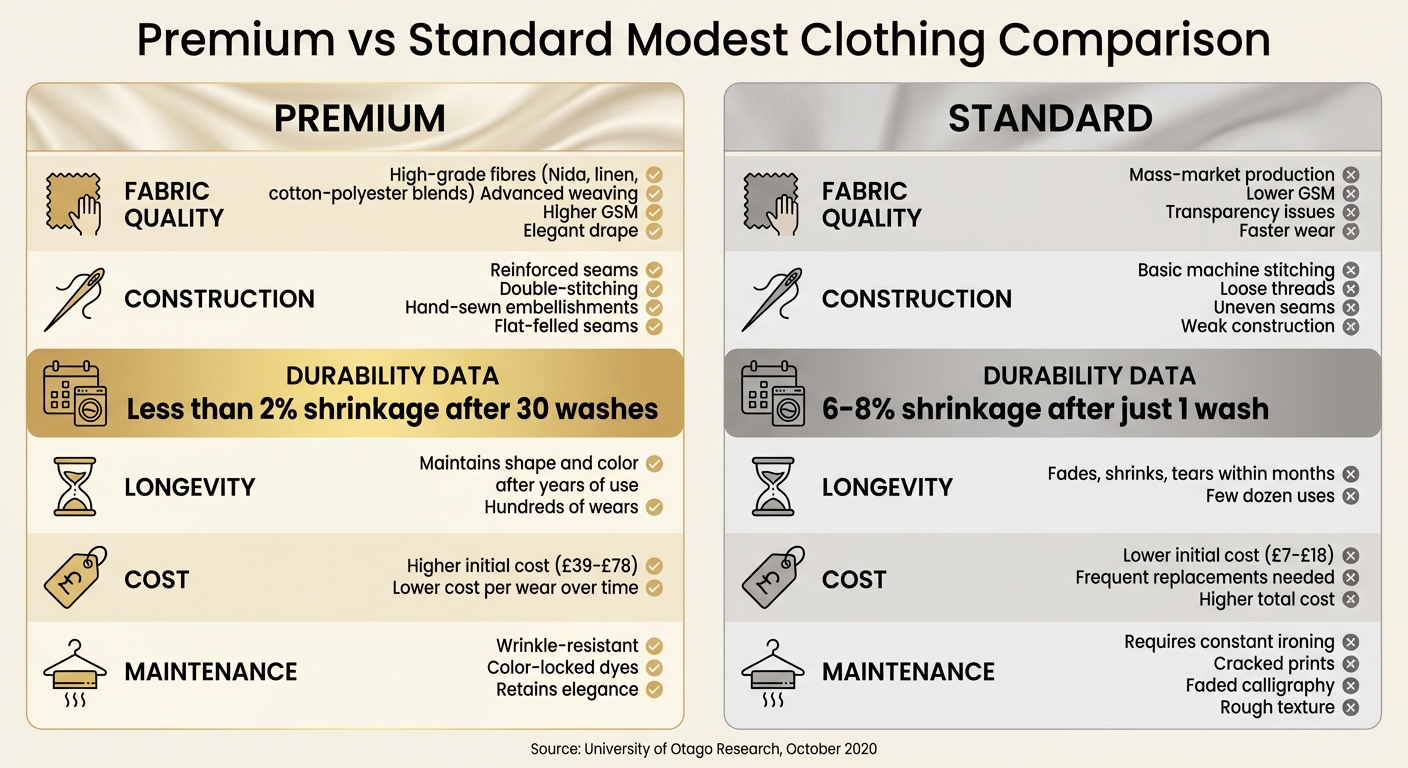
Premium vs Standard Modest Clothing: Durability and Cost Comparison
Comparison Table: Durability, Comfort, and Cost
When comparing premium and standard modest clothing, the differences in quality and performance are clear. Premium garments stand out due to their use of higher-grade fibres and advanced weaving techniques, resulting in softer fabrics with an elegant drape. On the other hand, standard clothing often relies on mass-market production methods, where speed takes precedence over quality.
Premium designs, crafted with superior materials and artisan tailoring, offer noticeable advantages in durability and comfort. For instance, premium garments use higher GSM (grams per square metre) fabrics, which provide better structure and longevity. In contrast, standard fabrics with lower GSM ratings may experience issues like transparency and quicker wear. Additionally, premium garments benefit from enhanced dye treatments, which lock in colour and resist fading. As fashion designer Afreen Hafsa explains:
"Fabric that maintains consistent drape and colour quality after repeated washing significantly increases customer satisfaction and brand loyalty".
Research from the University of Otago in October 2020 further supports these findings. Researchers Sarah Wakes and Linda Dunn tested black T-shirts at various price points - £3, £7, £17, £39, and £78. Their study revealed that the £7 T-shirt shrank by 6% to 8% after just one wash, while the £39 and £78 T-shirts maintained a length change of 2% or less after 30 washes.
The practical differences in fabric quality are also evident. Premium fabrics provide a smooth finish, are more durable, and resist wrinkles better than their standard counterparts. Construction methods further highlight this divide: premium garments often feature reinforced seams and hand-sewn embellishments, ensuring they withstand repeated use. Standard garments, however, typically rely on basic machine stitching, which may not hold up under stress.
These comparisons underline the long-term value of premium clothing, offering better performance and satisfaction. For more insights on maintaining your garments, refer to our guide on how to pick and care for the perfect thobe.
How to Care for Premium Modest Clothing
Taking proper care of your premium modest clothing ensures they remain as elegant and durable as the day you bought them. High-quality fabrics and expert craftsmanship deserve thoughtful maintenance to preserve their beauty and integrity. By following these care tips, your abayas and thobes can continue to look impeccable for years to come.
Washing and Drying Guidelines
When it comes to washing, gentleness is key. Always wash premium garments at 30°C or below, using a delicate or wool cycle [20,21]. For delicate fabrics like silk, chiffon, or premium Japanese cotton, hand washing in cold water is the safest choice [20,23].
To protect embellishments, turn garments inside-out and place them in a mesh laundry bag before machine washing [20,21,22,23]. Opt for mild, non-bleach detergents, as bleach can weaken fibres and cause yellowing, especially on white fabrics [20,22]. For tough collar stains, a paste of baking soda and water works wonders as a pre-treatment [20,21,23].
Skip the tumble dryer entirely. Instead, air dry your garments in the shade to avoid shrinkage and fading [20,21,22,23]. For wrinkles, a handheld steamer is the best tool - especially for embellished pieces - since it avoids the risk of burns that an iron might cause [20,22,23].
Once your garments are dry, how you store them is just as important for maintaining their quality.
Proper Storage and Maintenance
Storing your modest clothing correctly ensures they retain their premium quality and keep looking flawless.
Use wide, padded hangers to help garments maintain their shape and prevent shoulder bumps or stretching [20,21,23]. Stay away from wire hangers, as they can snag fabrics and even leave rust marks.
Choose breathable fabric garment bags for storage instead of plastic covers, which can trap moisture and lead to mildew [20,22,23]. Keep your clothing in a cool, dry space, away from direct sunlight to prevent fading and fabric damage. Allow garments to hang freely, avoiding overcrowding in your wardrobe. Also, avoid spraying perfumes directly onto your clothing, as this can cause permanent discolouration [22,23]. For black abayas, a lint roller is a simple yet effective way to remove dust and maintain a polished look.
Conclusion: Why Premium Modest Clothing Is Worth the Investment
Opting for premium modest clothing ensures quality that lasts. While budget garments can shrink by over 6% after just one wash, premium pieces typically experience less than 2% shrinkage even after 30 washes.
The real benefit of premium modest clothing lies in its long-term value. When you consider the cost per wear, the difference between budget and premium modest wear is striking. A high-quality garment can be worn hundreds of times, whereas cheaper alternatives often fall apart after just a few dozen uses. This durability reflects the essence of modest fashion - clothing made to be cherished, not discarded. This approach makes it easier to build a wardrobe of essential modest pieces for everyday wear.
It’s not just about saving money. Premium modest clothing also retains its elegance throughout its lifespan. Fabrics like Nida and Jersey are known for holding their shape and maintaining a luxurious look, even after years of use. These garments continue to look refined and dignified, showcasing the care that goes into their creation.
Investing in premium modest fashion is, ultimately, an investment in yourself. It’s about choosing clothing that aligns with your values, respects your budget in the long run, and preserves the grace and modesty that are important to you. This enduring quality makes premium modest clothing a choice that balances style and substance.
FAQs
How can I spot premium fabric quality before buying?
To spot high-quality fabric, pay attention to its structure - dense and tightly woven fabrics without visible gaps are a good sign. Check the fibre content by touch; it should feel sturdy yet smooth. Consistent colour throughout the material and resistance to issues like pilling or fading are also strong indicators of excellent craftsmanship. These details can guide you towards a smarter purchasing decision.
Which seams and finishings make abayas and thobes last longer?
Reinforced stitching, premium finishings, and meticulous care given to hems and edges play a crucial role in extending the lifespan of abayas and thobes. These details not only prevent fraying and wear but also help the garments retain their shape and polished look over time.
What’s the best way to wash premium modest clothing without damage?
To keep premium modest clothing like abayas and thobes in great condition, it's best to hand-wash them in cold or lukewarm water with a mild detergent. For delicate fabrics such as chiffon, silk, or crepe, a delicate cycle in the washing machine can work if you use a laundry bag, but hand-washing is still preferable. Embellished garments often benefit most from dry-cleaning. To preserve their shape and quality, store these items on padded hangers or in garment bags.