


How to Create a Timeless Modest Wardrobe
Creating a timeless modest wardrobe means selecting clothes that align with Islamic principles while being practical for daily life in the UK. Focus on neutral colours, durable fabrics, and classic designs to build a versatile collection. Start by assessing your current wardrobe, identifying gaps, and ensuring each piece meets modesty standards - covering the 'awrah, loose-fitting, and non-transparent. Invest in high-quality staples like abayas, thobes, and layering essentials. Proper care, such as gentle washing and air drying, extends the life of your garments. Styling with layers, textures, and accessories helps you create outfits suitable for any occasion while staying true to your values.
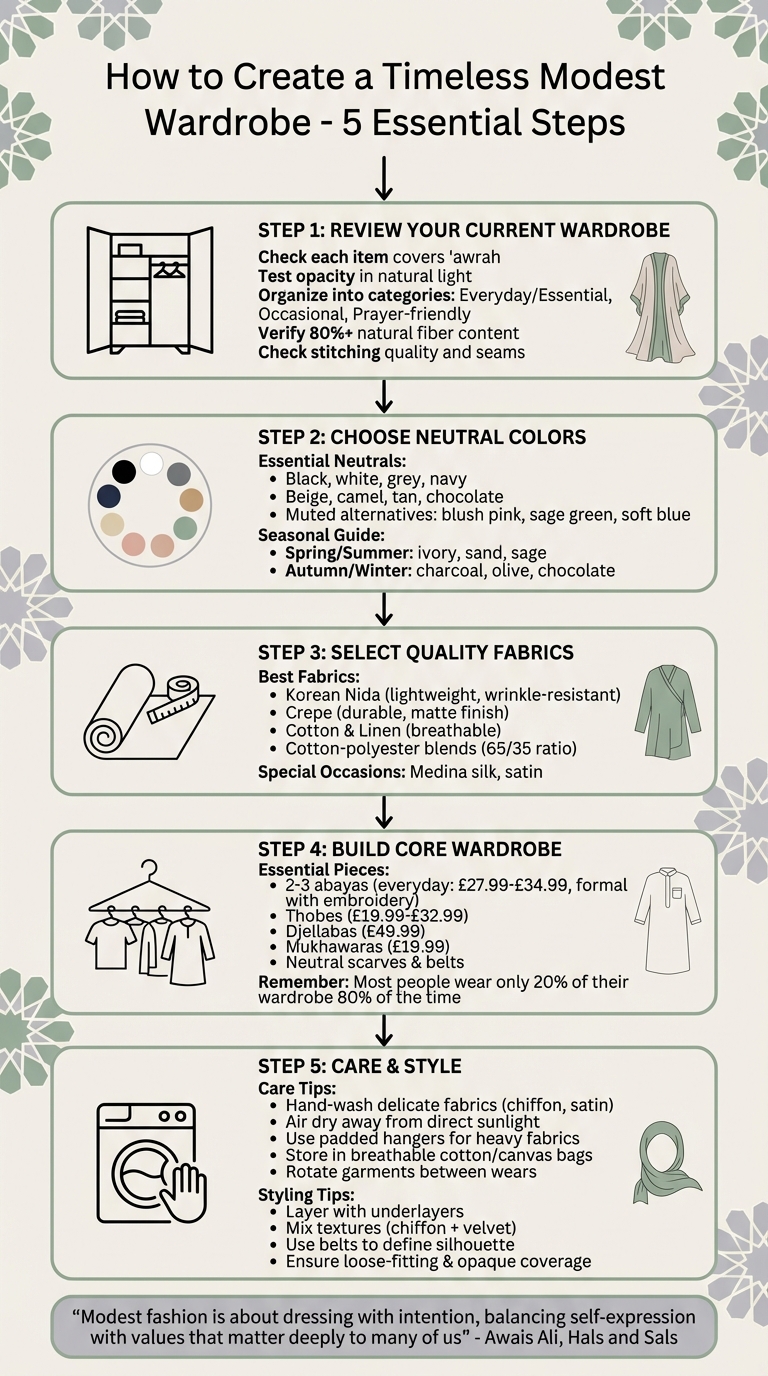
5 Steps to Building a Timeless Modest Wardrobe
Review Your Current Wardrobe
Before buying anything new, take a moment to assess what’s already in your wardrobe. Look at your existing clothes with an eye for Islamic modesty and practicality. This step helps you figure out what you’re missing, what no longer works, and what hidden gems you might have overlooked. It’s the perfect starting point for creating a wardrobe that’s both modest and functional. Once you’ve done this, focus on evaluating each piece to see if it meets modesty standards.
Identify Core Modest Pieces
Begin by ensuring that each item meets the basic modesty requirements: it should cover the 'awrah, be loose enough to avoid defining your shape, and be fully opaque. You can test for opacity by holding garments up to natural light - if you can see through the fabric, it might need a lining, an underlayer, or it may be time to let it go.
Next, identify wardrobe staples. These include classic abayas (such as open, closed, or butterfly styles), thobes or jubbas for men, and a variety of hijabs (jersey, chiffon, or modal) in neutral shades like black, white, grey, sand, or mocha. These neutral tones are incredibly versatile and pair well with almost any outfit. Open abayas and kimonos are particularly handy for transforming simple dresses or tunics into complete modest outfits.
Organise your wardrobe into categories like 'Everyday/Essential' (practical and easy-to-wear pieces), 'Occasional' (embellished or luxurious fabrics like silk or satin), and 'Prayer-friendly' (such as one-piece jilbabs or slip-on hijabs). This system not only highlights what you wear most often but also makes it easier to spot gaps in your collection.
Check for Multi-Use Items and Quality
Take a closer look at the quality of your clothes. Prioritise garments made from natural fabrics - like cotton, linen, silk, or wool - with at least 80% natural fibre content. These materials are breathable, long-lasting, and maintain their fit over time. Pay attention to the stitching: it should be straight and secure, with no loose threads. Gently pull at seams to check their durability - weak stitching is a sign the garment might not last.
Also, inspect buttons and zippers. High-quality buttons made from metal, wood, or bone are far sturdier than plastic ones, and zippers should glide smoothly without catching. Watch out for signs of wear, like "seam twist" (where side seams shift out of place) or pilling, which can indicate poor construction. For knitted items, ensure the vertical rows of stitches are straight - crooked stitching often means the garment will lose its shape after washing.
Finally, think about how versatile each piece is. For example, a neutral-toned open abaya can work for errands when worn over trousers, for work when layered over a midi dress, or for formal occasions with a matching hijab. Similarly, long-sleeve inner layers in neutral colours like black, white, or sand can be paired with sheer tops or open abayas to meet modesty standards while staying adaptable. If an item only works for one specific purpose, consider donating or replacing it. This process will help you refine your wardrobe and identify what’s missing.
sbb-itb-81d10cb
Choose Colours, Fabrics, and Styles That Last
After evaluating what you already own, the next step is to build a wardrobe that stands the test of time. This means selecting colours, fabrics, and styles that strike a balance between practicality and elegance. A timeless modest wardrobe ensures your clothing works for various occasions and weather conditions, without compromising on style or comfort.
Select Neutral Colours
Neutral colours are the cornerstone of a versatile wardrobe. Shades like black, white, grey, navy, beige, and earthy browns (camel, tan, chocolate) are incredibly adaptable, making it easy to mix and match outfits without much effort. These tones are perfect for creating a cohesive wardrobe with minimal fuss.
If you want to expand beyond classic neutrals, muted shades like blush pink, sage green, or soft blue are excellent alternatives. These colours maintain the same versatility while adding a subtle touch of variety. For professional environments, navy and beige offer a polished, refined look. Seasonal adjustments are worth considering too: lighter neutrals such as ivory, sand, and sage are ideal for spring and summer, helping you stay cool, while darker shades like charcoal, olive, and chocolate are perfect for autumn and winter.
To keep neutral outfits from looking monotonous, experiment with textures. For instance, pair a silk blouse with a chunky knit cardigan, or layer a linen abaya over a cotton slip. Starting with just a few key pieces in neutral tones - three to five is a good number - can simplify your wardrobe and make daily dressing effortless.
Focus on Quality Fabrics
The fabric of your clothing plays a huge role in its longevity and comfort. For abayas, Korean Nida is a popular choice. It’s lightweight, soft, breathable, and wrinkle-resistant, all while draping beautifully without clinging. For everyday wear, crepe is another practical option. It’s durable, has a sophisticated matte finish, and works well in humid climates.
Natural fibres like cotton and linen are excellent for breathability and moisture control. Linen is especially popular for its cooling properties, while cotton is a reliable, versatile choice for essentials like tunics and undergarments. For something that combines comfort with easy care, cotton-polyester blends (e.g., 65% cotton and 35% polyester) are a great option. They retain colour better than pure cotton and hang nicely.
"The secret [to layering without overheating] is in the fabric." - Elegance Galleria
When choosing fabrics, check their opacity in natural light, and only add linings if absolutely necessary. Save luxurious options like Medina silk or satin for special occasions, while relying on more durable fabrics like crepe or cotton blends for daily use.
Pick Classic Designs
Classic designs ensure your wardrobe remains relevant, no matter how trends evolve. Focus on loose silhouettes and longer hemlines that provide comfort, dignity, and breathability. These styles not only align with modesty but are also practical for both warm and cool climates.
Key wardrobe staples include abayas with clean lines, tunics, flowy trousers, and tailored blazers. These pieces can be layered and styled in countless ways, making them suitable for everything from casual outings to formal events. For instance, a simple open abaya in a neutral colour can transition seamlessly from running errands to attending a professional meeting or even a formal gathering, depending on how you accessorise it.
"Islamic traditional fashion is an artistic blend of modesty, culture, and timeless design." - Minnaba
To maintain modesty, ensure that sleeves reach the wrists and hemlines fall below the knee. Functional details, like sleeves that can be rolled up for wudu, add a layer of practicality without sacrificing style. By choosing well-made, classic designs, you create a wardrobe that not only aligns with your values but also stays relevant through changing fashion trends. These timeless pieces, paired with neutral tones and durable fabrics, form the foundation of a cohesive, modest wardrobe.
Build Your Core Modest Wardrobe
Once you've settled on a neutral colour palette and selected quality fabrics, the next step is to choose versatile wardrobe staples that balance modesty and elegance. Research indicates that most people wear only 20% of their clothing 80% of the time. This underscores the value of investing in adaptable essentials that can work for various occasions.
Abayas for Different Occasions
A well-rounded wardrobe should include two to three abayas tailored to different needs. For everyday use, opt for a simple open-front abaya in black or navy, priced between £27.99 and £34.99. These are perfect for casual outings like errands or meeting friends. For more formal settings, consider Moroccan-inspired abayas featuring subtle embroidery. These designs offer understated sophistication and often come with matching scarves and belts, allowing you to adjust the fit and style for different events.
To further expand your wardrobe, add traditional garments like thobes and djellabas to cover a broader range of occasions.
Thobes and Djellabas
Thobes, priced between £19.99 and £32.99, offer a blend of tradition and practicality. Look for breathable fabrics suitable for all seasons - light cottons for summer and heavier blends for cooler weather. Many modern thobes also feature functional design elements, making them ideal for daily wear.
Djellabas, typically priced around £49.99, combine traditional craftsmanship with modern aesthetics. These Moroccan-inspired two-piece sets often include intricate embroidery and belts, giving you the flexibility to customise your look. Their loose silhouettes provide excellent coverage and comfort, making them suitable for various climates. Neutral shades like beige or olive can be dressed up with accessories for special occasions or worn casually for weekend gatherings.
To complete your wardrobe, focus on layering pieces and accessories that enhance both style and practicality.
Layering Pieces and Accessories
Layering pieces are key to adding versatility without compromising modesty. Mukhawaras, priced at £19.99, serve as excellent base layers under abayas or can be worn alone. Neutral-toned slip dresses are another great option, providing coverage under sheer fabrics while maintaining a polished look.
Accessories like scarves and belts can elevate even the simplest outfits. A collection of scarves in neutral shades offers endless styling possibilities, while belts help define loose silhouettes when needed. As Awais Ali of Hals and Sals explains:
"Modest fashion is about dressing with intention, balancing self-expression with values that matter deeply to many of us".
These thoughtful additions allow you to personalise your wardrobe while staying true to the principles of modest fashion.
Care for and Style Your Wardrobe
Taking good care of your wardrobe not only preserves the quality of your garments but also allows you to make the most of your collection. With proper care, your clothes will last longer, and with thoughtful styling, you can create a variety of outfits from just a few pieces.
Garment Care Tips
Each fabric has its own care requirements, so knowing how to treat them is key. For instance, delicate fabrics like chiffon and satin should be hand-washed in cold water with mild, pH-neutral detergents. Meanwhile, sturdier materials like crepe and jersey can usually handle a gentle machine wash cycle. Avoid using harsh chemicals or fabric softeners, as these can damage the texture or finish of your clothes.
When drying, skip wringing or twisting delicate garments. Air drying is a better option than tumble drying, which can cause shrinkage or distort the fabric. For dark garments like black abayas and thobes, dry them away from direct sunlight to keep the colours from fading. As Sherzod Karimov of Mariam Collection puts it:
"Taking care of your abayas is not just a chore - it's an extension of how we care for the blessings we've been given".
Storage matters too. Opt for breathable garment bags made of cotton or canvas rather than plastic, which can trap moisture and lead to unpleasant odours or mildew. Use padded or wide velvet-coated hangers for heavier fabrics like crepe, velvet, and satin to avoid misshapen shoulders. Lightweight fabrics such as jersey or chiffon are best folded with tissue paper between layers to prevent snagging. When travelling, rolling your abayas and thobes instead of folding them is a great way to reduce creases and save space.
To keep your clothes looking fresh, rotate them between wears to let the fabric rest. Avoid spraying perfume directly onto garments to prevent stains. For embroidered pieces, turn them inside out and use a mesh laundry bag when washing. A handheld steamer works well for delicate embroidery, and ironing on the reverse side with low heat can also help maintain their appearance.
Once your garments are well cared for, they’re ready to be styled in countless elegant ways.
Create Different Outfit Combinations
After ensuring your clothes are in top condition, it’s time to experiment with styling to maximise their versatility. Start with underlayers like long-sleeved t-shirts, roll-neck tops, or inner slip dresses to provide coverage under open abayas or sheer materials. For example, a chiffon abaya can easily transition from summer to winter by pairing it with a warm inner slip, leggings, and a chunky knit cardigan.
Playing with garment lengths can add visual interest and structure to your outfits. For instance, layering a maxi abaya with a cropped jacket or cardigan can break up large blocks of colour and highlight your silhouette. Mixing textures - like pairing a chiffon abaya with a velvet cape - can add dimension and elegance to your look. Small tweaks, such as cinching a loose abaya with a belt or tucking in layers, can give your outfit a more tailored and polished feel.
Accessories are another way to elevate simple outfits. A selection of neutral scarves offers endless styling opportunities, while a well-chosen belt can define your waist and add a stylish focal point. When it comes to footwear, slim trousers should just graze the tops of ankle boots, whereas wide-leg trousers should drape neatly over them. Throughout your styling, ensure that your outfits remain loose-fitting, opaque, and provide the appropriate level of coverage to align with Islamic principles.
Conclusion
A modest wardrobe that resonates with your faith and values is both timeless and practical. By assessing your current clothing, choosing neutral tones and durable fabrics, and investing in adaptable pieces like abayas, thobes for any event, and layering essentials, you can build a wardrobe that works seamlessly across seasons and occasions. Each item becomes a reflection of your personal style and beliefs. This thoughtful approach blends practicality, spirituality, and elegance into a unified expression.
When dressing with intention (niyyah) to seek Allah's pleasure, even the simple act of choosing an outfit becomes an act of devotion. This spiritual perspective elevates your wardrobe beyond fashion, encouraging a focus on inner character, humility, and self-respect - values deeply rooted in Qur'anic guidance on modest attire.
Focusing on quality over quantity ensures your wardrobe remains timeless, regardless of fleeting trends. As Fasilah aptly notes, "Sustainability in fashion isn't just about materials - it's about longevity, versatility, and mindful consumption". This mindset equips you for any event, from casual outings to formal gatherings.
With careful maintenance - gentle washing, air drying, and proper storage - your wardrobe remains durable and versatile. By experimenting with layering, accessories, and creative combinations, you can expand your outfit options while adhering to the loose-fitting, opaque standards of Islamic modesty. A well-curated wardrobe isn’t limiting; it’s empowering, offering a style that’s both confident and rooted in your values.
Each step - evaluation, selection, investment, and care - builds a wardrobe that embodies quality, functionality, and grace. Ultimately, it serves as a daily reminder that true beauty lies not in appearances but in the purity of your soul, character, and actions.
FAQs
How many core pieces do I really need?
A core wardrobe usually consists of about 13 to 23 key pieces that are both timeless and versatile. The idea is to invest in high-quality items that seamlessly mix and match, making them suitable for different occasions. This number strikes a balance between practicality and style, ensuring your wardrobe remains functional without becoming overwhelming.
What are the best modest fabrics for UK weather?
When it comes to modest wear in the UK, choosing the right fabrics is all about adapting to the country's famously unpredictable weather. For all-season comfort, lightweight and breathable materials like cotton and linen are excellent choices. They keep you cool and comfortable, no matter the occasion.
As the temperatures drop, thicker fabrics such as wool or heavy crepe become essential. These materials not only provide warmth but also maintain the modesty and elegance often sought in such clothing. By selecting fabrics that combine practicality with modesty, you can stay comfortable and stylish through the UK's ever-changing seasons.
How can I make neutral outfits look less plain?
To give neutral outfits a bit more flair, think about layering and playing with textures. Mixing various shades within one colour family - like pairing creamy whites with soft ivory or deep greys with lighter dove tones - can add depth and a touch of refinement. You can also bring in luxurious fabrics, understated patterns, or well-chosen accessories to enhance a neutral look, keeping it polished yet effortlessly classic.