


How to Choose an Abaya That Works for All Seasons
The UK's unpredictable weather makes dressing in abayas a challenge. To stay comfortable year-round, focus on choosing the right abaya by considering fabric, layering, and design. Here's what you need to know:
- Fabric Matters: Lightweight cotton, linen, and chiffon are perfect for summer, while wool blends, velvet, and heavy crepe provide warmth in winter. Mid-weight crepe works well for spring and autumn.
- Layering Tips: Use open abayas with bodysuits or jackets for transitional seasons. Thermal layers and cardigans help with temperature changes.
- Seasonal Colours: Light pastels and neutrals suit warmer months, while jewel tones and darker shades like burgundy and navy are ideal for cooler weather.
- Practical Designs: Hooded styles, button details, and flowing cuts ensure comfort in all conditions.
Start with neutral core pieces and build a wardrobe that balances comfort, modesty, and style regardless of the season. For UK weather, breathable, wrinkle-resistant fabrics and versatile designs make all the difference.
How UK Seasons Affect Abaya Choices
The UK's ever-changing weather can make dressing in abayas a challenge. Winter's cold and damp conditions call for warmth and water resistance, while summer demands lightweight, breathable options to stay cool. Spring and autumn are the trickiest, with unpredictable weather that can shift from sunny to rainy in a matter of hours. An abaya for these seasons needs to be versatile enough to handle both chilly outdoor air and warm indoor spaces - without sacrificing comfort. This makes fabric selection a key consideration for managing temperature effectively.
How Fabric Affects Temperature Control
Fabric weight plays a crucial role in keeping you comfortable. Measured in GSM (grams per square metre), it determines how suitable an abaya is for different weather conditions. Lightweight fabrics with a lower GSM are ideal for hot summer days, offering the breathability you need to stay cool. On the other hand, heavier fabrics with a higher GSM provide the insulation necessary for frosty winter mornings. Choosing the wrong weight can lead to discomfort - either shivering in the cold or overheating indoors.
Breathability is another key factor. Fabrics like cotton and linen are excellent for warmer months because they allow air to circulate and wick moisture away from the skin. For colder weather, materials such as wool blends, velvet, or heavy crepe are more effective at retaining heat. However, the real test comes when you transition between environments. Stepping from a cold street into a warm shop can make even winter fabrics feel stifling if they lack proper airflow.
Lining choice can make or break your comfort. Breathable linings like viscose help with air circulation and prevent moisture build-up, keeping you comfortable throughout the day. In contrast, heavy polyester linings can trap heat and create a clammy feeling, especially when moving between heated interiors and chilly exteriors. For the UK's frequent rain, water-resistant options like polyester blends or nylon are practical, as they repel moisture and dry quickly compared to natural fibres.
Understanding how fabrics perform in different conditions sets the stage for effective layering - especially during the unpredictable weather of spring and autumn.
Layering for Spring and Autumn Weather
Spring and autumn are all about flexibility, as temperatures can vary dramatically throughout the day. Open abayas are a great choice for these seasons, as they allow for easy layering. Pair them with lightweight jackets, cardigans, or long-sleeve bodysuits to adapt to changing conditions. Cotton or bamboo bodysuits are particularly useful, offering warmth in the morning without causing overheating when the afternoon sun comes out.
"In the UK, spring and autumn bring unpredictable weather - sometimes sunny, other times cold or rainy. The key here is layering." – Arabesque Elegance
Mid-weight crepe fabrics strike a balance during transitional seasons. They provide enough structure and coverage to look polished, while still being breathable enough to handle fluctuating temperatures. For autumn, pair them with thin turtlenecks or mock neck tops for added warmth. In spring, wear them over sleeveless slip dresses for a lighter look. This approach allows you to adjust your outfit as the day progresses, avoiding bulky layers or the need to carry extra clothing.
sbb-itb-81d10cb
Selecting Fabrics for Different Seasons
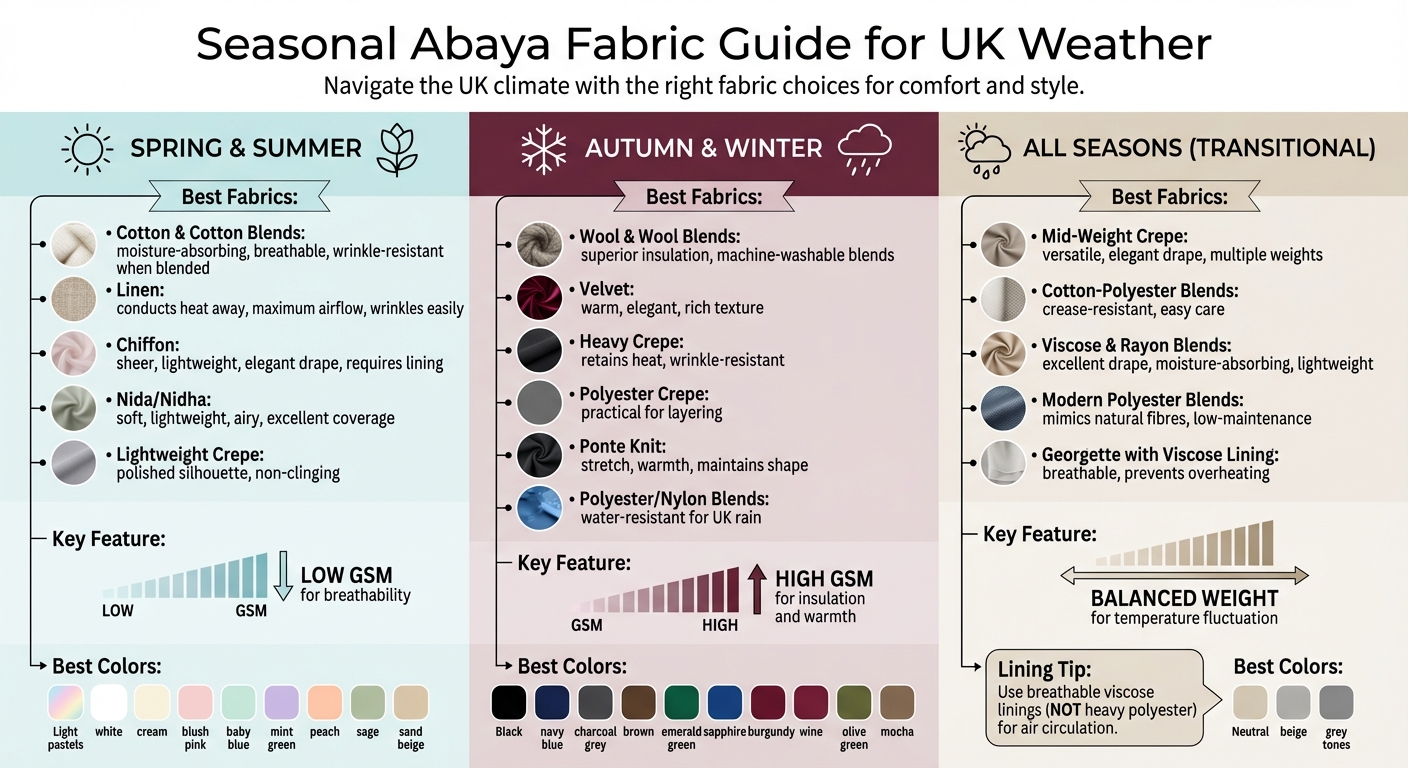
Seasonal Abaya Fabric Guide for UK Weather
Lightweight Fabrics for Spring and Summer
When the weather warms up, choosing breathable and lightweight fabrics is key. Cotton and cotton blends are popular choices for summer abayas due to their ability to absorb moisture and allow airflow. While pure cotton is highly breathable, it does tend to crease easily. Blended cotton, which incorporates a small amount of polyester, offers better wrinkle resistance without sacrificing comfort.
Linen is another excellent option for hot days. It naturally conducts heat away from the body and provides maximum airflow, making it a go-to for summer wear. However, linen's tendency to wrinkle can be a drawback. To address this, many modern abayas use linen blends, which are easier to maintain while retaining linen's cooling properties.
For a more formal look, chiffon is a fantastic choice. This sheer, lightweight fabric drapes beautifully, making it ideal for elegant occasions. Since chiffon is quite delicate and transparent, it’s often paired with a lining to ensure proper coverage.
If you're after a luxurious yet practical option, Nida (or Nidha) fabric stands out. Soft, lightweight, and airy, it provides excellent coverage without adding bulk. For structured summer styles, lightweight crepe offers a polished silhouette that works well for both casual and formal settings, thanks to its non-clinging texture.
As temperatures cool, it’s time to switch to fabrics designed to keep you warm and comfortable.
Warm Fabrics for Autumn and Winter
When the chill sets in, fabrics that retain warmth become essential. Wool and wool blends are excellent for cold UK winters, offering superior insulation. While pure wool is great at trapping heat, blending it with synthetic fibres can make it less itchy and easier to care for. Some wool-blend garments are even machine-washable on gentle settings.
For formal winter events, velvet is a standout choice. It not only keeps you warm but also adds a touch of elegance with its rich texture and appearance.
"For autumn and winter, medium to heavier fabrics like nidha, polyester crepe, wool blends, and double-layered materials provide extra warmth while still offering a graceful drape." – Safa Islamic Lifestyle
Heavy crepe and polyester crepe are versatile options for transitional weather. They retain heat and resist wrinkles, making them practical choices for layering under winter coats. Ponte knit, with its added stretch, provides warmth and maintains a tidy look throughout the day. For the UK's frequent rain, abayas made from polyester blends or treated nylon blends offer water resistance while maintaining a modest, flowing silhouette.
Blended Fabrics for Multiple Seasons
If you’re looking for abayas that work across different climates, blended fabrics are a great solution. Mid-weight crepe is particularly versatile, as it comes in light, medium, and heavy weights, adapting well to changing temperatures while maintaining an elegant drape.
Cotton-polyester blends are practical for everyday wear. They resist creasing better than pure cotton and are easier to care for, making them a favourite for busy schedules. For spring and autumn, viscose and rayon blends work well. They offer excellent drape, absorb moisture effectively, and feel light against the skin. Modern polyester blends, meanwhile, mimic the luxurious feel of natural fibres while being low-maintenance.
For lightweight blended abayas, such as those made from georgette, look for designs lined with breathable materials like viscose. This helps prevent overheating, especially when temperatures fluctuate. Avoid heavy polyester linings, as they can trap heat and reduce comfort.
Colours and Designs for Each Season
Choosing the right colours and designs for your wardrobe isn't just about fashion - it’s also about feeling comfortable and confident as the seasons change. Just as layering and fabric choices adapt to the weather, the right colours and design details can elevate both style and practicality.
Pastel and Light Colours for Warmer Months
Spring and summer call for light, breezy colours like white, cream, and pastels that reflect sunlight and help you stay cool. Shades such as blush pink, baby blue, mint green, lavender, and peach complement the softer light of UK summers, creating a fresh, airy aesthetic.
"When it's hot, lighter colours are your best choice. They reflect sunlight and help regulate your body temperature - keeping you cool and fresh all day long." – Fatima Zohra Meralet, Ina Collection
For a touch of elegance, soft neutrals like dusty rose, taupe, or light mocha are excellent choices. Earthy tones - such as sage, sand beige, terracotta, and burnt peach - add a sophisticated edge while maintaining a summery vibe. Picture pairing a beige abaya with a mint green hijab or a white abaya with a dusty pink scarf for a cohesive and stylish summer look.
As the seasons shift and the air grows cooler, it’s time to embrace deeper, richer colours.
Dark and Rich Colours for Cooler Months
Autumn and winter wardrobes benefit from darker tones like black, navy blue, charcoal grey, and brown, which not only absorb warmth but also exude timeless elegance. Jewel tones - emerald green, sapphire, burgundy, and wine - bring richness and depth, perfect for the colder months.
Earthy autumn shades like olive green, mocha, and burgundy pair beautifully with heavier fabrics, creating a look that feels both cosy and polished. For instance, a matte crepe abaya styled with glossy leather accessories provides a striking contrast in texture, adding dimension to your outfit.
Beyond colour, the design of your abayas plays a big role in ensuring comfort throughout the year.
Design Features for Seasonal Comfort
The way an abaya is designed can make all the difference when it comes to seasonal comfort. During summer, loose-fitting silhouettes and open-front styles are ideal for maximising airflow. Flowing designs prevent fabric from clinging to the body, and shrug-style abayas work wonderfully as lightweight outer layers over casual T-shirts.
In winter, designs shift towards warmth and practicality. Longer lengths, high collars, and button details help retain heat, while structured styles like one-piece Jilabas or Irani kaftans offer added insulation. Hooded abayas are especially useful for keeping dry in rainy weather, while A-line and flowy cuts ensure you can move freely, even when layered up.
When it comes to embellishments, less is more. Focus on beading or embroidery at the cuffs, hems, or necklines to avoid making the garment feel heavy. Always test the fit by walking, sitting, and raising your arms to ensure the abaya allows for easy movement without restriction.
Building a Year-Round Abaya Collection
Creating a practical abaya collection for the UK's ever-changing seasons doesn’t mean filling your wardrobe with endless pieces. Instead, it’s about making thoughtful choices in fabrics, colours, and designs that offer flexibility and style throughout the year.
Choosing Neutral Core Pieces
Start with a few neutral-toned abayas in shades like beige, light grey, off-white, or black. These timeless colours work well in any season and pair easily with different hijabs and accessories. For fabric, mid-weight crepe is a fantastic option. It drapes beautifully, provides enough opacity, and is breathable for mild days while being sturdy enough to layer under winter coats.
Opt for matte finishes over shiny fabrics for maximum versatility. Matte crepe or cotton in neutral tones can transition effortlessly between casual outings and formal occasions. Pay attention to fabric composition when shopping - linen or cotton blends are perfect for summer, while wool blends or double-layered fabrics provide the necessary warmth for winter without adding unnecessary bulk. Once your neutral foundation is ready, focus on styling everyday abayas using layering techniques to adapt to seasonal shifts.
Layering Methods for Changing Weather
In colder months, thermal base layers or thin inner slips can be worn under abayas to keep you warm without adding bulk. This keeps your outfit sleek while providing much-needed insulation.
For spring and autumn, lightweight jackets, cardigans, or even denim jackets work perfectly over open-front abayas. Flowing cuts or open styles are ideal for layering, ensuring comfort and ease of movement. Scarves, shawls, and pashminas are excellent for quick adjustments when moving between warm indoor spaces and chilly outdoor weather. To avoid discomfort, choose viscose linings instead of heavy polyester, as they improve air circulation and prevent the fabric from clinging when layered.
Beyond layering, selecting abayas with built-in adaptable features can make your collection even more versatile.
Multi-Season Designs with Adjustable Features
Practical design elements can transform your abayas into year-round staples. Hooded abayas are great for rainy days, while button details allow you to wear them open or closed depending on the temperature. Some designs even include detachable layers, offering two styles in one garment. These features complement the layering tips above, giving you even more flexibility without the need for extra pieces.
When shopping for abayas, test how they move - walk, sit, and raise your arms to ensure the fabric flows comfortably and doesn’t cling awkwardly when layered. High-quality polyester blends and Nida fabric are excellent choices for everyday wear as they resist wrinkles and hold up well with frequent use. A-line and flowy cuts are particularly practical, ensuring you can move freely, even with added layers underneath.
Conclusion
Choose abayas with fabrics, colours, and designs that work across seasons to create a wardrobe that’s both stylish and practical. Look for materials that balance breathability and insulation for year-round comfort. Light pastels and neutral tones are ideal for summer, while richer shades like burgundy and olive green pair well with heavier winter fabrics.
Start with neutral core pieces in matte finishes and build from there with smart layering. Thermal layers are perfect for winter, while lightweight cardigans work well for spring and autumn. Features like hoods, buttons, or detachable layers make it easier to adjust to changing weather while maintaining modesty and comfort.
For British weather, breathable and wrinkle-resistant fabrics are a must, along with comfortable, modest silhouettes. These elements create a wardrobe that can handle unpredictable conditions with ease.
Al-Badr Clothing offers a range of abayas designed with these principles in mind. Their Essential Abaya 4-piece sets, priced at £27.99, include matching scarves, belts, and slip dresses in versatile shades like Soft Blue, Burgundy, and Olive Green - perfect for building a neutral base. The Petal Glow Abaya, available for £34.99, features flowing fabric in Pale Grey, Black, and Sage. For a touch of elegance, the LEEN Abaya, crafted from premium Korean fabric with lace detailing, is now on sale for £34.99 (down from £49.99). Plus, with free shipping on orders over £50, free returns, and 10% off your first order, you can explore these styles risk-free.
FAQs
How do I tell if an abaya fabric will be breathable enough for UK summer?
To stay comfortable in UK summers while wearing an abaya, look for fabrics like cotton, linen, chiffon, or Nidha. These lightweight materials allow air to circulate, helping you stay cool. Choosing lighter colours and loose, flowy designs can further enhance comfort. Steer clear of heavy synthetic fabrics, as they tend to trap heat and moisture. Focusing on natural fibres can make a noticeable difference in keeping you cool and avoiding overheating on warmer days.
What’s the best way to layer an abaya for changeable spring and autumn days?
For spring and autumn, layering your abaya with lightweight and breathable pieces is the way to go. Opt for a fitted, long-sleeve top or bodysuit made from cotton or bamboo - these materials help with comfort and keeping cool. Pair this with wide-leg trousers or culottes crafted from linen or cotton blends. This combination offers extra coverage without feeling heavy, making it easy to stay comfortable and modest as the temperature shifts during the day.
What abaya features are best for rain and wind in the UK?
For the UK's rainy and windy weather, go for abayas crafted from water-resistant or quick-drying materials such as Saudi crepe, georgette, or lightweight polyester blends. Look for designs with flowy cuts to stop water from collecting and longer hemlines for extra coverage. Consider abayas with detachable outer layers, making it easier to adapt to the ever-changing weather. These features help maintain both comfort and modesty, even in less-than-ideal conditions.