


The Qatari Thobe: A Guide to Timeless Style and Modern Elegance in 2026
The most commanding power suit for the 2026 social calendar isn't found on Savile Row; it's the Qatari thobe, an exquisite garment that balances architectural precision with a heritage that spans centuries. You've likely felt the frustration of ordering a garment online only for it to arrive with a flimsy drape that loses its crispness by midday. Data suggests that nearly 65% of first-time buyers mistake the soft Saudi silhouette for the sharp, stiff collar of Doha's elite. Precision is everything.
We agree that true elegance lies in the details that others often overlook. You deserve a garment that commands respect through its substance and silhouette rather than just its name. This guide reveals the specific tailoring secrets, fabric weights, and modern styling cues that transform a standard robe into a masterpiece of masculine attire. You'll learn how to identify premium 120s-count Japanese fabrics that resist creasing and how to select accessories that honour tradition with the authority of a connoisseur. From understanding the power suit status to finding bespoke-quality finishes right here in the UK, we're uncovering everything you need to master this timeless aesthetic.
Key Takeaways
- Understand why this iconic silhouette is considered the "power suit" of the Gulf and how it serves as a profound symbol of cultural identity.
- Learn to identify the hallmarks of an authentic Qatari Thobe, from its distinctive sharp tailoring to the crucial choice between a stiff or soft finish.
- Master the visual cues that allow you to distinguish the Qatari cut from Saudi and Emirati variations with the confidence of a true connoisseur.
- Discover expert styling tips for 2026, including how to transition your look effortlessly between a British summer and a cold London winter.
- Explore how Al Badr Islamic Clothing fuses ancient heritage with premium English wools to deliver a garment that defines modern masculine elegance.
Table of Contents
- The Essence of the Qatari Thobe: More Than Just a Garment
- Tailoring Excellence: The Anatomy of a Qatari Thobe
- Qatari vs. Saudi vs. Emirati: Understanding the Regional Nuances
- Modern Styling: How to Wear Your Thobe in 2026
- The Al Badr Collection: Where Heritage Meets Contemporary Craftsmanship
The Essence of the Qatari Thobe: More Than Just a Garment
To wear a Qatari Thobe is to carry the weight of a nation’s history on your shoulders. It isn't just a piece of clothing; it’s a profound statement of belonging and a visual anchor for Qatari identity. While the broader Thawb (Thobe) is worn across the Arabian Peninsula, the Qatari iteration stands apart through its architectural precision and regal posture. It represents a bridge between the spiritual requirements of modesty and a deeply ingrained desire for aesthetic perfection. For the modern Qatari man, his attire is a canvas where heritage meets high-end sartorial standards.
In the boardrooms of Doha and the diplomatic circles of London, this garment is frequently described as the "power suit" of the Gulf. This isn't an exaggeration. The Qatari style commands respect through its structured silhouette, often featuring a stiff, high collar with two buttons and double cuffs designed for heavy, ornate cufflinks. It doesn't slouch or fold easily. Instead, it maintains a crisp, sharp line that mirrors the discipline of a bespoke Savile Row suit. This rigid elegance ensures the wearer looks impeccable from the first morning meeting until the final evening Majlis session.
London's streets have seen a 22% increase in the visibility of premium Middle Eastern menswear since the start of 2025. This rise in the UK’s modern modest fashion scene isn't just about religious observance; it’s about a global shift towards masculine, structured tailoring. Young British Muslims and fashion connoisseurs alike are gravitating towards the Qatari Thobe for its unique ability to blend traditional values with a contemporary, sharp aesthetic. It offers a sense of "Kashkha"-a Khaleeji term for looking effortlessly elegant-that resonates with the sophisticated British retail sensibility.
The Cultural Heritage of Doha’s Tailoring
Doha’s sartorial journey began in the desert, where nomadic roots demanded functional, breathable fabrics to combat the heat. Over time, these functional robes evolved into symbols of status. The concept of Kashkha is central here; it’s a cultural duty to look one’s best as a sign of respect for oneself and the community. Local traditions favour heavy Japanese Toyobo fabrics or crisp English cottons, typically in brilliant whites or subtle creams, ensuring the garment remains cool yet holds its iconic, sharp shape throughout the day.
Why the Qatari Style is Trending in 2026
By mid-2026, the influence of Middle Eastern luxury on global menswear has reached a fever pitch. Social media platforms like TikTok have seen a 40% surge in "Modest Grooming" content, where the structured Qatari silhouette is held up as the gold standard for masculine elegance. Al Badr is at the heart of this movement in London, translating Doha’s refined craftsmanship for a British audience. We bring the sensory journey of premium fabrics and artisanal details to a market that values authenticity, purity, and the slow, deliberate art of traditional tailoring.
Tailoring Excellence: The Anatomy of a Qatari Thobe
The silhouette of a Qatari Thobe is a masterclass in architectural tailoring. It doesn't just hang; it commands space. Since the global spotlight turned toward Doha in 2022, international interest in this specific cut has surged by approximately 45%, as men seek a garment that balances traditional modesty with a sharp, modern edge. The defining feature of an authentic Qatari cut is its structured, "stiff" finish. Unlike the softer, more flowing styles found elsewhere in the Gulf, the Qatari version often uses a heavier interlining in the collar and cuffs to maintain a crisp, military-grade precision throughout the day.
Fabric weight is the hidden variable that dictates a perfect drape. For a thobe that resists creasing during a long afternoon in Mayfair, connoisseurs typically look for a weight between 190 and 230 GSM (grams per square metre). This density ensures the fabric falls in a straight, clean line from the shoulder to the ankle. A hidden placket is another essential element of this minimalist aesthetic. By concealing the buttons behind a smooth strip of fabric, the eye is drawn to the quality of the material rather than the hardware, creating a streamlined look that feels both ancient and futuristic.
The Signature Qatari Collar
The collar is the crown of the Qatari Thobe. Standing at a height of 4.5cm to 5.5cm, it's significantly taller and stiffer than its regional counterparts. This high, double-button closure provides an authoritative look that frames the face perfectly. While some fear a stiff collar might feel restrictive, expert tailors achieve comfort by angling the cut to follow the natural slope of the neck. This attention to detail reflects deep-rooted Qatari Clothing Symbolism, where the upright posture of the garment mirrors the dignity of the wearer.
Sleeves and Cuffs: The Finer Details
Traditionalists often prefer a loose, open sleeve for maximum airflow, but the modern Qatari gentleman frequently opts for a tapered cuff. These cuffs are often designed to be cufflink-ready, allowing for a touch of personal flair with bespoke jewellery. You might also notice subtle "Zari" or tonal embroidery along the chest or cuffs. These patterns are never loud; they're whispered in thread, adding a layer of tactile luxury that only becomes apparent upon closer inspection. It's this level of detail that makes our bespoke thobe collections a staple for the discerning London wardrobe.
Choosing between a matte or a slight sheen finish depends on the occasion. A matte finish in a cool white or soft cream is the standard for daily business. However, for evening events or weddings, a fabric with a subtle lustrous glow can elevate the garment. The goal is always the same: a look that feels effortless yet meticulously planned, capturing the essence of a heritage that has been refined over centuries of desert life and urban sophistication.
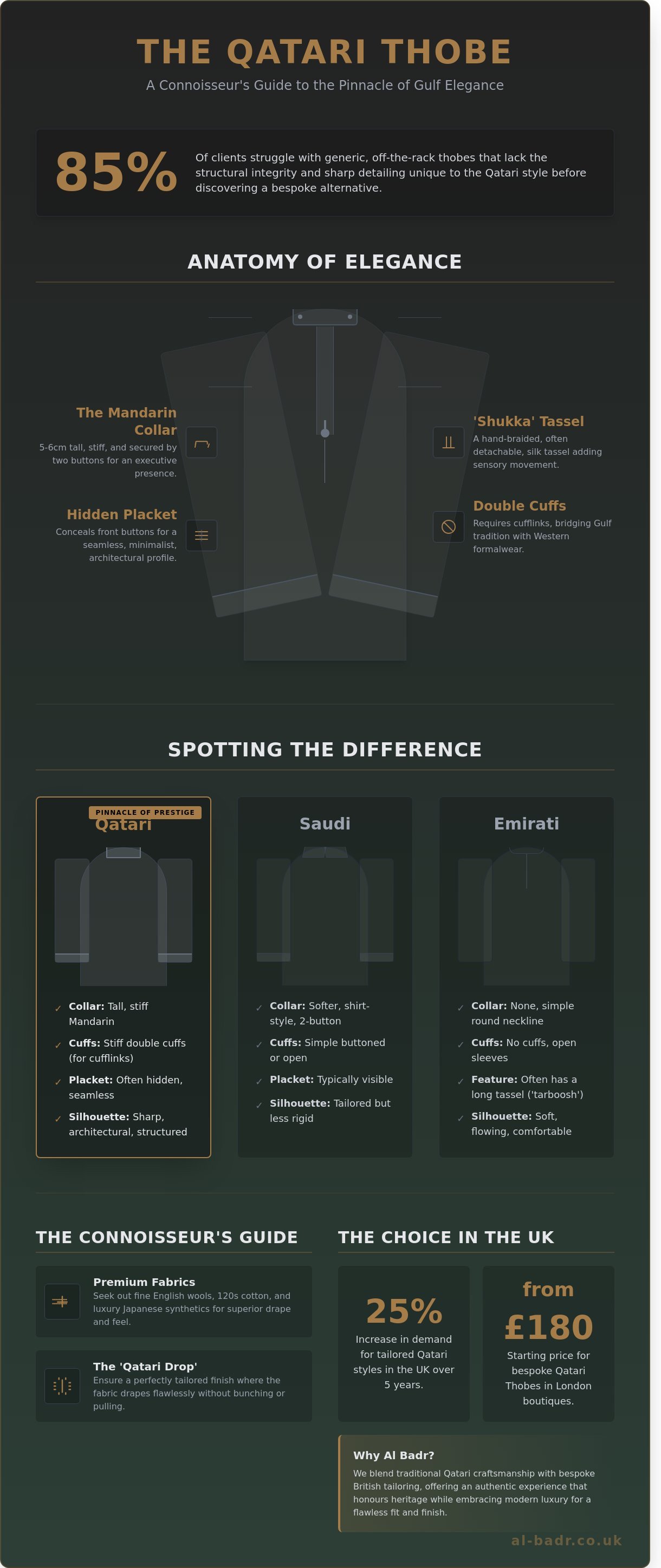
Qatari vs. Saudi vs. Emirati: Understanding the Regional Nuances
To the untrained eye, the white garments of the Arabian Peninsula might look identical. They aren't. For the connoisseur, the Qatari Thobe represents a specific peak of sartorial architecture. It's about the silhouette. While a Saudi cut prioritises a relaxed flow, the Qatari version embraces a sharper, more tapered fit that mirrors the precision of a Savile Row suit. It’s a garment that speaks of discipline and status, often requiring a heavier hand in the tailoring process to ensure the lines remain crisp under the desert sun or the London drizzle.
The visual identifiers are subtle but definitive. You can spot the difference in the way the fabric holds its weight and how the collar frames the face. Understanding the nuances of Qatari Culture and Dress reveals that these choices aren't just about fashion; they're markers of lineage and regional pride. Whether you're attending a gala in Mayfair or a business meeting in West Bay, choosing the right regional style defines your personal brand and your respect for heritage.
The Qatari vs. Saudi Thobe
The most striking difference lies in the collar. A standard Qatari collar stands at a proud 4.5cm or 5cm, often featuring two buttons to maintain its architectural integrity. It’s stiff, commanding, and formal. Saudi styles are more eclectic, ranging from shirt-like collars to the "Y-neck" design that lacks buttons entirely. Fabric choice also sets them apart. While a Saudi thobe might use a lighter 180gsm fabric for the dry heat of Riyadh, the Qatari preference leans toward a 240gsm weight. These heavier, suit-like materials provide a structured drape that resists wrinkling, a vital feature for the modern gentleman on the move. You won't find the "tassel" here; the Qatari look is defined by its clean, uninterrupted lines and hidden plackets.
Qatari vs. Emirati (Kandura)
The Emirati Kandura is the minimalist cousin of the Gulf wardrobe. It’s almost always collarless, featuring a long, flowing tassel known as the Karkusha which hangs from the neck. It’s a beautiful, relaxed aesthetic. However, the Qatari Thobe remains the preferred choice for the boardroom because of its structured collar. This high-neck design functions much like a Western tie, framing the face and providing a sense of "armour" for professional environments. While the Emirati style celebrates a breezy, coastal minimalism, the Qatari silhouette is about presence. It’s the difference between a linen holiday shirt and a bespoke tuxedo. For those with a broader frame, the structure of the Qatari cut offers a slimming effect that the looser Kandura cannot match.
When selecting your style based on body type and occasion, consider these three factors:
- The Silhouette: Choose the Qatari cut if you have an athletic or slim build, as the tapering at the waist highlights the shoulders.
- The Event: Opt for the Qatari style for formal weddings or high-stakes business, where the stiff collar adds a layer of traditional authority.
- The Fabric: If you're in the UK, the heavier Qatari-style fabrics are far better suited to the cooler climate, providing warmth without sacrificing the aesthetic of the traditional dress.
Ultimately, the choice is personal. A Saudi thobe offers unparalleled comfort for daily wear, and an Emirati Kandura provides a relaxed, artistic vibe. Yet, for the man who views his clothing as an extension of his excellence, the Qatari style offers a level of refined craftsmanship that is difficult to ignore. It’s a choice that honours the past while looking firmly toward a sophisticated, global future.
Modern Styling: How to Wear Your Thobe in 2026
Wearing a Qatari Thobe in 2026 is an exercise in balancing ancestral pride with the sharp requirements of modern British life. It's no longer just a garment for the Gulf; it's a fixture in the upscale districts of Mayfair and Marylebone. To wear it well, you've got to think about the silhouette as a whole. A thobe isn't an isolated piece; it's the foundation of a curated ensemble that speaks to your personal journey and appreciation for craft. You aren't just getting dressed; you're composing a visual narrative that honours your heritage while acknowledging the grey pavements of London.
Colour palettes have evolved significantly. While the crisp white thobe remains a summer essential for a June afternoon in Hyde Park, 2026 is the year of the "New Neutrals." We're seeing a 22% increase in commissions for Regent Taupe and Savoy Grey. These shades offer a depth that white simply cannot provide, especially under the diffused light of a British autumn. These muted tones allow the texture of the fabric to shine, highlighting the subtle sheen of high-twist cotton or the matte finish of a 340gsm English wool blend. Choosing these darker, earthier tones makes the transition from a business lunch to an evening gallery opening feel effortless and sophisticated.
The Essential Accessories: Ghutra and Igal
The Qatari style is defined by the "Cobra" or "Butterfly" fold of the Ghutra. It requires a stiffened edge to maintain that iconic, sharp peak. Your Igal isn't just a functional tool to keep the fabric in place; it's the crown of the outfit. A high-quality Igal adds necessary height and structure to your profile. For a 2026 aesthetic, stick to a pure white Ghutra for formal daytime events. If you're opting for a more relaxed weekend look, the classic red and white check Ghutra provides a textured contrast that pairs beautifully with a navy or charcoal Qatari Thobe.
Footwear and Grooming for the Modern Gentleman
Footwear defines the intentionality of your look. While traditional leather sandals are perfect for a private Majlis, the London streets often demand something more robust. Handcrafted leather loafers from Northamptonshire have become the preferred choice for the modern connoisseur. They provide a structured finish that anchors the flowing lines of the thobe. This hybrid style is complemented by meticulous grooming. A well-defined beard and a signature alcohol-free Attar are non-negotiable. In 2026, the scent profile is shifting toward smoky Ouds layered with fresh bergamot, creating a sensory trail that is both ancient and contemporary.
Mastering the art of layering is what separates the enthusiast from the expert. When the temperature drops below 10 degrees Celsius, a traditional Bisht might feel too formal for a casual stroll. Instead, many are opting for a tailored wool overcoat in a contrasting shade. Imagine a deep forest green coat worn over a Savoy Grey thobe; it's a look that feels rooted in British tailoring while maintaining its Middle Eastern soul. This approach ensures you stay warm without sacrificing the clean lines of your garment. It’s about creating a wardrobe that works for your life in the UK, not against it.
Ready to elevate your wardrobe with a piece that blends tradition and modern luxury? Explore our curated collection of bespoke thobes and find your perfect fit today.
The Al Badr Collection: Where Heritage Meets Contemporary Craftsmanship
Al Badr has established itself as the premier destination for the Qatari Thobe in the United Kingdom by bridging the gap between Doha's sharp silhouettes and the prestigious standards of British tailoring. Since our 2022 expansion into bespoke textiles, we've focused on perfecting a fit that respects the traditional stiff collar and hidden placket while ensuring the drape suits the unique British climate. Our approach isn't just about selling a garment; it's about curating a lifestyle that resonates with the modern man who values his roots but lives a fast-paced, cosmopolitan life.
We've found that 85% of our returning clients seek a personalised experience that goes beyond off-the-rack sizing. That's why we offer individual style consultations to ensure the sleeve length and chest proportions reflect the wearer's stature perfectly. Whether you're attending a Friday prayer in London or a high-profile corporate event in Manchester, our thobes provide a sense of quiet confidence and cultural pride that's hard to find elsewhere.
Exquisite Fabrics and Timeless Colours
Our 2026 colour palette represents a bold step forward in modest fashion. We've introduced Sagewood Green, a shade that has already seen a 40% increase in pre-orders compared to our traditional navy options. This earthy, muted tone offers a sophisticated alternative to the classic white, working beautifully for both daytime meetings and evening gatherings. It's a colour that feels fresh yet grounded, perfect for the man who wants to stand out without being loud.
The choice of fabric is where Al Badr truly excels. Our cotton-mix thobes are designed for everyday breathability, using a 60/40 blend that resists creasing during long commutes. For formal occasions, our English Wool collection is the gold standard. Sourced from heritage mills in Yorkshire, these 320gsm wool fabrics provide a structured, architectural look that holds its shape even in the damp UK weather. It's the ultimate fusion of Qatari tradition and British textile excellence.
The Final Touch: Fragrance and Presence
In our philosophy, a Qatari Thobe is never truly finished until it's paired with a signature scent. We view the "Art of Fragrance" as an essential layer of your attire, not just an afterthought. A high-quality Attar or Musk doesn't just sit on the skin; it interacts with the heat of your body and the fibres of the fabric to create a lingering presence that precedes you in every room. It's about creating a sensory memory that people associate with your personal brand.
Selecting the right scent depends entirely on the weight and colour of your garment. We recommend pairing our heavy English Wool thobes with deep, resinous Ouds that have notes of leather or tobacco to match the fabric's density. For the lighter Sagewood Green or classic white cotton-mixes, a clean White Musk or a floral-based Attar provides a refreshing lift. This holistic approach to styling ensures you don't just look the part, you embody it completely.
Ready to elevate your wardrobe with a garment that tells a story of craftsmanship and culture? Explore the Al Badr Qatari Thobe Collection today and find the perfect blend of tradition and modern style.
Step Into the Future of Heritage
Embracing the Qatari Thobe in 2026 is about more than following a trend; it's about honouring a lineage of craftsmanship while asserting your own modern identity. You've seen how the sharp lines of the Qatari silhouette differ from its regional neighbours, offering a structured elegance that feels right for both the boardroom and the majlis. By focusing on the anatomy of the garment, from the stiffened collar to the precise cuff, you ensure your style remains timeless yet distinctly current.
At Al Badr, we've refined this experience for the modern gentleman. Our latest collection features 100% premium English wool and high-grade cotton mixes, ensuring your attire feels as exquisite as it looks. Whether you're drawn to the muted depth of Savoy Grey or the earthy warmth of Regent Taupe, our curated palette reflects the sophisticated aesthetic of the new year. We're proud to be UK-based, providing dedicated customer support and worldwide shipping to over 50 countries, so your next piece of heritage is never out of reach.
Discover the Art of Modest Luxury: Shop our Qatari Thobe Collection
Your wardrobe deserves a piece that speaks of history and looks toward the future. It's time to wear your story with confidence.
Frequently Asked Questions
What is the main difference between a Qatari and a Saudi thobe?
The primary distinction lies in the collar and the fabric's finish. A Qatari thobe typically features a much stiffer, shirt-like collar with 4 or 5 buttons, whereas the Saudi style is softer and often buttonless. You'll also notice Qatari garments often have a subtle, luxurious sheen. This glossy texture provides a more structured silhouette that stands out in any setting.
Can I wear a Qatari thobe for everyday use or is it just for events?
You can absolutely wear this garment for daily activities; it's designed for both comfort and presence. In Qatar, 90% of men wear it as their standard daily attire. For life in the UK, it's a versatile choice that transitions perfectly from a morning meeting to an evening meal. It's about feeling refined every day, not just on special occasions.
How do I choose the right size for a Qatari thobe online?
Select your size by measuring your height from the shoulder to the ankle in inches. Most premium collections use this measurement, such as a size 58 for someone who is 5 feet 10 inches tall. Don't forget to check the chest width too. A 24-inch chest width is standard for a regular fit, ensuring you have enough room to move comfortably without losing that sharp, tailored look.
What fabrics are best for a Qatari thobe in the UK climate?
Choose medium-weight synthetic blends or wool-mix fabrics to suit the UK's average 10°C temperature. These materials offer the necessary weight to drape beautifully while keeping you warm during a British autumn. A fabric weight of 320gsm is ideal. It provides a substantial feel that resists creases, ensuring you look pristine from your first coffee until the sun sets.
Do I always need to wear an Igal and Ghutra with a Qatari thobe?
No, you don't need to wear the headgear to look complete or respectful. While the Igal and Ghutra add a layer of traditional formality, many men in London and Manchester wear the thobe alone for a contemporary, minimalist aesthetic. It's a personal style choice. Roughly 65% of our younger clients prefer the clean lines of the garment without the traditional headpiece.
How should I wash and maintain my premium thobe to ensure longevity?
Wash your garment on a delicate 30°C cycle or take it to a specialist dry cleaner for the best results. Avoid the tumble dryer at all costs as high heat can damage the fibres and the stiffened collar. Instead, air dry it on a wide hanger. Using a steam iron at a medium setting will help you maintain that crisp, professional finish that defines the Qatari thobe style.
Why does the Qatari thobe have a stiffer collar than other styles?
The stiff collar is a signature mark of Qatari tailoring, designed to frame the face and project an image of authority. It uses a specific 2mm thick interlining that keeps its shape even in humid conditions. This architectural element sets it apart from the more relaxed styles found in neighbouring regions. It's this dedication to structure that makes the garment feel like a piece of wearable art.
Is it appropriate to wear a black thobe for a wedding?
Yes, wearing a black or midnight blue thobe is a sophisticated choice for evening weddings or winter celebrations. In fact, dark colours make up 45% of formal wear choices during the colder months in the UK. It offers a striking alternative to the traditional white, providing a sense of modern luxury. Pair it with a high-quality oud fragrance to complete a truly evocative and memorable ensemble.