


The Difference Between Lightweight and Structured Thobes
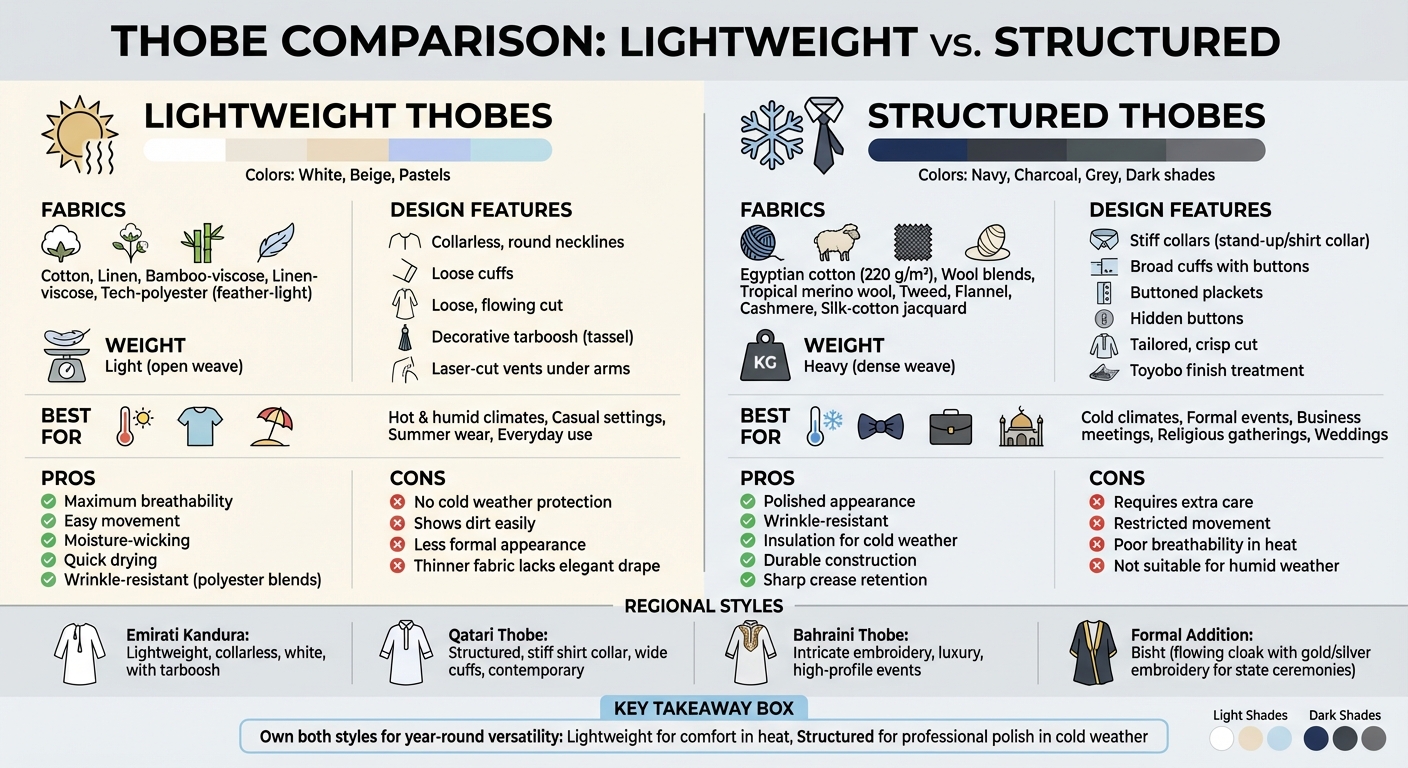
Choosing the right thobe comes down to climate and occasion. Lightweight thobes are made for hot weather, offering comfort and breathability. Structured thobes, on the other hand, provide a polished, formal look, ideal for colder climates or professional settings.
Here’s a quick breakdown:
- Lightweight Thobes: Thin fabrics (like cotton or linen), loose fits, and collarless designs. Perfect for warm climates and casual settings.
- Structured Thobes: Heavier fabrics (like wool blends), tailored cuts, and formal details like stiff collars and hidden buttons. Best for formal events or cooler weather.
Key takeaway: Lightweight thobes keep you cool and relaxed, while structured thobes ensure a sharp, professional appearance. Owning both styles ensures you're prepared for any occasion or season.
Lightweight vs Structured Thobes: Complete Comparison Guide
Fabric and Design Characteristics
The key distinction between lightweight and structured thobes lies in the fabric's weight and composition. Lightweight thobes often use breathable blends like linen-viscose or bamboo-viscose, which are excellent at wicking moisture and promoting airflow. These fabrics feature open weaves that allow heat to escape quickly, making them perfect for warmer climates. On the other hand, structured thobes are crafted from materials such as long-staple Egyptian cotton with a Toyobo finish or tropical merino wool, typically weighing around 220 g/m². These fabrics have a dense weave that holds a sharp crease, maintaining a polished and professional appearance. Beyond the fabric itself, the way these thobes are constructed further sets them apart.
The construction of structured thobes includes features like stiff collars, broad cuffs, buttoned plackets, and hidden buttons, all of which contribute to their formal and refined silhouette. In contrast, lightweight thobes, like the Emirati Kandura, are designed with comfort in mind. They often feature collarless, round necklines and loose cuffs, with decorative touches such as a tarboosh (a long tassel) that enhance their elegance without adding bulk.
The difference in silhouette also reflects the purpose of each style. Structured thobes are tailored to maintain a neat, crisp form, even after prolonged wear or travel. Lightweight designs, however, embrace a loose, flowing cut that prioritises air circulation and freedom of movement - an essential feature for staying comfortable in hot, humid conditions.
Fabric treatments further highlight these differences. High-end structured thobes often include treatments like the Toyobo finish applied to Egyptian cotton or silk-cotton jacquard blends, enhancing their crispness and luxurious texture. Meanwhile, lightweight thobes may utilise tech-polyester, described as "feather-light", with innovations like laser-cut vents under the arms to prevent overheating.
Ultimately, these distinctions in fabric and tailoring influence not just the look but also the practicality and comfort of each style. Structured thobes convey authority and professionalism, thanks to their wrinkle-resistant fabrics and sharp lines, making them ideal for formal or business settings. Lightweight thobes, with their emphasis on breathability and ease of movement, offer a more relaxed aesthetic suited for casual gatherings and everyday wear. Choosing the right thobe for any event depends on balancing your environment with the impression you want to leave.
sbb-itb-81d10cb
Best Uses by Climate and Occasion
When it comes to hot and humid climates, lightweight thobes are a smart choice. They allow for better airflow and help minimise perspiration. In tropical regions or during a warm British summer, linen thobes stand out. Thanks to their moisture-wicking ability and quicker drying time compared to pure cotton, they’re perfect for staying comfortable. For everyday summer wear, Emirati polyester blends are a practical option - they resist wrinkles and still offer breathability. Choosing light colours like white, beige, or pastels can also make a big difference, as they reflect sunlight and help you stay cooler during outdoor events. On the other hand, cooler climates and formal settings call for entirely different fabrics and styles.
As temperatures fall, denser materials such as wool, tweed, or flannel become essential. These fabrics provide much-needed warmth, making them ideal for winter business meetings or formal religious gatherings in colder regions. Wool blends, in particular, combine comfort with a polished look, making them a go-to for formal occasions. Darker shades, like navy or charcoal, not only add a sense of gravitas but also convey warmth, which suits the mood of formal settings.
Regional styles also play a role in selecting the right thobe for specific occasions. The Bahraini thobe, known for its intricate embroidery, is the epitome of luxury and is often reserved for high-profile events. The Qatari thobe, with its stiff shirt collar and wide cuffs, offers a more contemporary and structured appearance, making it a great fit for business settings. For the most formal occasions, such as state ceremonies or prestigious weddings, a structured thobe is traditionally complemented by a bisht. This flowing outer cloak, often crafted from fine wool or cashmere and embellished with gold or silver embroidery, adds a touch of grandeur.
Layering can also enhance the thobe's functionality. In warm conditions, pairing the thobe with a moisture-wicking undershirt improves comfort without adding bulk. For formal gatherings, thobes made from luxurious fabrics like cashmere or jacquard provide a refined texture suitable for any climate. Ultimately, the key is to align fabric choice with the environment: lightweight materials ensure comfort in humid weather, while heavier fabrics deliver the insulation needed for colder temperatures.
Pros and Cons
The fabric and design elements of thobes lead to unique advantages and drawbacks for each style.
Lightweight thobes are all about comfort and practicality in warmer climates. Typically made from cotton or linen, they help maintain a comfortable body temperature and allow for easy movement thanks to their loose fit and minimal layering. Linen dries fast, and cotton-polyester blends resist wrinkling, making them a solid choice for everyday wear. However, these thobes don’t offer much protection against cold or windy weather. While light colours like white and beige are great for reflecting sunlight, they tend to show dirt more easily, meaning frequent washing might be needed. Additionally, the thinner fabrics used in these designs may lack the elegant drape of more structured styles, which can make them feel less appropriate for formal winter settings.
Structured thobes bring a sense of sophistication and formality, perfect for occasions like weddings, business meetings, or other formal gatherings. With features such as stand-up collars, buttoned cuffs, and tailored cuts, they deliver a sharp, polished look. These thobes are often made from crisp fabrics with added linings and reinforced stitching, providing both durability and insulation during cooler months. However, maintaining their sharp lines requires extra care, and the tailored fit can restrict movement, making them less ideal for hot, humid environments where breathability is a priority.
When choosing between these styles, consider the climate and the occasion. For warm British summers or tropical getaways, lightweight thobes offer great airflow and moisture-wicking benefits. On the other hand, structured thobes, often made with wool blends, are better suited for winter business meetings or formal religious events, offering both warmth and a refined appearance. To keep either style fresh and comfortable, wearing a white cotton undershirt can help absorb sweat and protect the outer garment. This breakdown highlights how to align your thobe choice with both the season and the setting.
Conclusion
The insights shared earlier simplify the process of selecting the right thobe for different occasions and climates.
When it comes to hot, humid weather or casual summer outings, lightweight fabrics like cotton or linen are ideal. These materials help you stay cool, offer ease of movement, and are perfect for informal outdoor settings. For colder seasons or formal events, heavier fabrics like wool blends, flannel, or thick cotton provide warmth and a polished appearance, making them suitable for business meetings or the chillier months in the UK.
If you often deal with variable weather, having both styles in your wardrobe is a smart choice. A collarless Emirati-style Kandura in white is perfect for warm conditions, offering breathability and simplicity. Meanwhile, a Saudi-style thobe in darker shades like navy or grey - with its structured collar - adds a touch of professionalism for formal or semi-formal settings. For a practical middle ground, cotton-polyester blends offer a mix of breathability and wrinkle resistance, making them great for unpredictable weather.
Even colour selection plays a role, balancing seasonal practicality with the right level of formality and comfort.
The key takeaway? Your thobe should suit your lifestyle and the demands of your environment. Whether you're dressing to beat the summer heat or to stay warm and sharp in winter, understanding these factors ensures you’ll always be comfortable and well-dressed. This harmony between practicality and style highlights why the thobe remains a timeless choice for any occasion.
FAQs
Which thobe is best for the UK’s changeable weather?
A lightweight thobe works perfectly for the UK’s unpredictable weather, particularly during warmer spells or when conditions fluctuate. Materials like cotton or linen are ideal as they allow your skin to breathe, help regulate body temperature, and draw moisture away, ensuring you stay cool and comfortable. On the other hand, thobes crafted from heavier fabrics offer more structure and warmth, making them better suited for colder or more consistent weather. However, they’re less practical when it’s damp or on warmer days.
How can I tell if a thobe is truly lightweight before buying?
To find a lightweight thobe that’s perfect for warm weather, focus on breathable fabrics such as cotton or linen. These materials help with airflow, keeping you cool. A loose fit is also key, as it allows for better ventilation and comfort. Opt for light colours like white or pastels, which reflect sunlight rather than absorbing it. Minimal layering is another important factor, ensuring the thobe feels airy while still looking stylish.
What’s the easiest way to keep a structured thobe looking crisp?
To keep a structured thobe looking sharp, use a wide hanger to help it maintain its shape and avoid creases. When ironing, stick to a low heat setting to protect the fabric, and let it air dry rather than using a tumble dryer. Regular steaming or ironing, combined with careful storage, will keep your thobe looking neat and well-presented.